
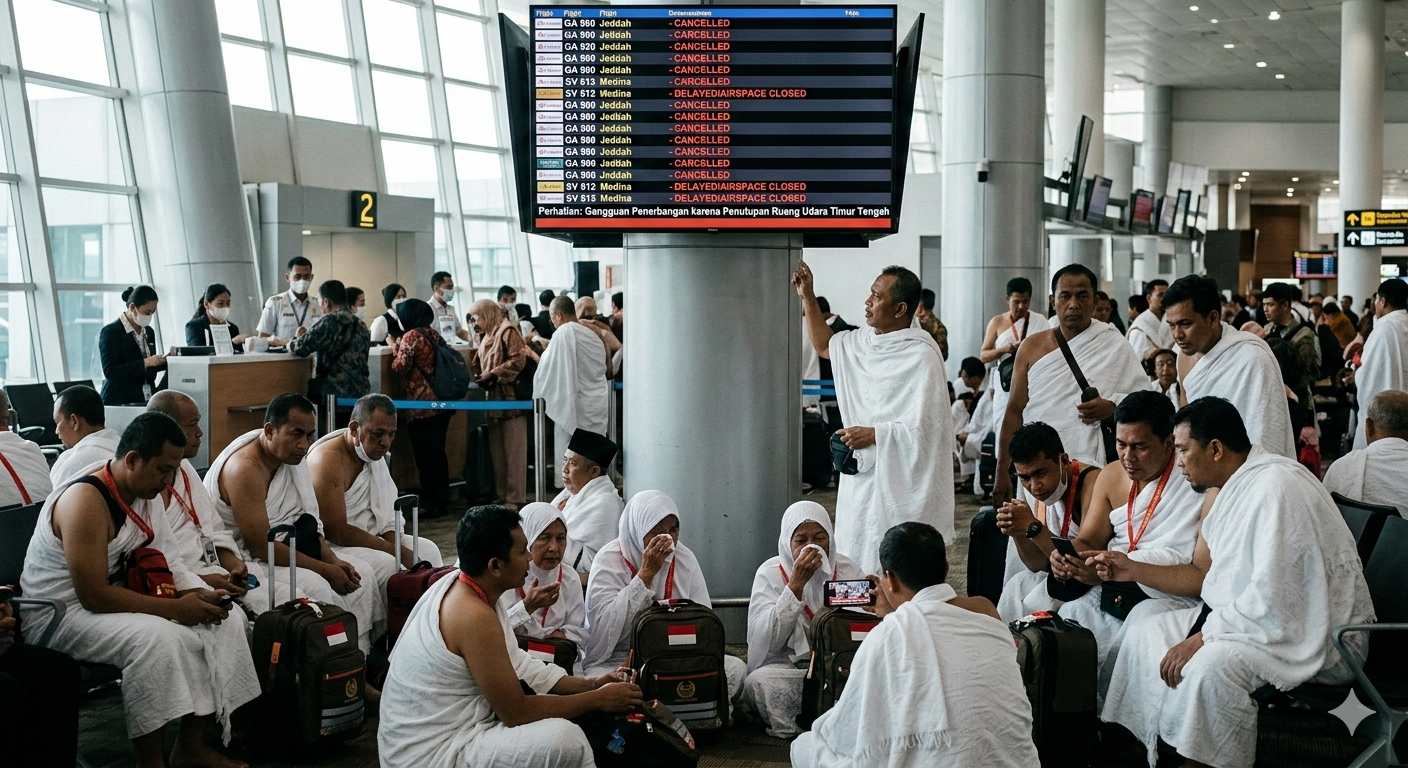
The recent escalation in Middle Eastern tensions has sent shockwaves through the global travel industry, particularly impacting the religious aspirations of thousands. A reported US-Israel Strike on Iran has created a logistical nightmare for the Indonesian Ministry of Religious Affairs and travel providers, as the safety of citizens traveling abroad becomes the top priority.
The geopolitical instability triggered by a US-Israel Strike on Iran has directly compromised the travel plans of approximately 59,000 Indonesian Umrah pilgrims. These individuals, who have often saved for years to perform their pilgrimage to the holy cities of Mecca and Medina, now face indefinite delays and redirected flight paths.
The sheer volume of 59,000 Indonesian Umrah pilgrims makes this one of the largest sudden disruptions to religious travel in recent history. Because Indonesia is the world's most populous Muslim-majority nation, any conflict in the Middle East—especially a US-Israel Strike on Iran—immediately creates a ripple effect across its aviation and religious sectors.
Breakdown of Impacted Groups
The 59,000 Indonesian Umrah pilgrims are not a monolithic group; they represent various demographics and travel stages:
Currently in Transit: Pilgrims who were mid-air or at layover hubs when the US-Israel Strike on Iran occurred.
Awaiting Departure: Thousands scheduled to leave Jakarta, Surabaya, and Medan in the coming days.
Returning Home: Those finishing their pilgrimage who are now stranded in Saudi Arabia due to airspace closures related to the US-Israel Strike on Iran.
The US-Israel Strike on Iran
To understand why 59,000 Indonesian Umrah pilgrims are stranded, one must look at the severity of the military action. The US-Israel Strike on Iran represents a significant escalation in regional hostilities. Military analysts suggest that such a strike targets critical infrastructure, which in turn leads to the immediate "red-flagging" of nearby civilian flight corridors.
A US-Israel Strike on Iran doesn't just affect the two nations involved; it effectively paralyzes the airspace over Iraq, Jordan, and parts of the Persian Gulf. For the 59,000 Indonesian Umrah pilgrims, this means the standard flight paths used by airlines like Garuda Indonesia and Saudi Arabian Airlines are no longer viable.
Logistical Challenges for the 59,000 Indonesian Umrah Pilgrims
The logistics of managing 59,000 Indonesian Umrah pilgrims during a period of active conflict like a US-Israel Strike on Iran are staggering. Travel agencies are working around the clock to re-route flights, but the options are limited.
Airspace Restrictions and Rerouting
Following the US-Israel Strike on Iran, major airlines have had to pivot. Below is a comparison of typical flight conditions versus the current crisis:
| Feature | Standard Operations | Post US-Israel Strike on Iran |
|---|---|---|
| Flight Duration | 9–11 Hours | 14–16 Hours (due to detours) |
| Fuel Costs | Optimized | Significantly Increased |
| Airspace Used | Direct (via Iran/Iraq) | Indirect (via Africa/South Asia) |
| Status of 59,000 Pilgrims | On Schedule | Grounded or Delayed |
The "Bottleneck" Effect
When a US-Israel Strike on Iran occurs, the available "safe" airspace becomes crowded. Every airline in the world is trying to use the same narrow corridors. This creates a bottleneck that leaves the 59,000 Indonesian Umrah pilgrims at the mercy of slot availability.
The Emotional and Financial Toll on Pilgrims
For many of the 59,000 Indonesian Umrah pilgrims, the pilgrimage is a "once in a lifetime" event. The news of a US-Israel Strike on Iran brings not just logistical frustration, but genuine fear and heartbreak.
Financial Loss: Many travel insurance policies do not cover "acts of war" or specific geopolitical escalations like a US-Israel Strike on Iran.
Safety Concerns: Families in Indonesia are desperately seeking news of the 59,000 Indonesian Umrah pilgrims, fearing they may be caught in the crossfire of the US-Israel Strike on Iran.
Spiritual Interruption: The sanctity of the Umrah is overshadowed by the harsh realities of global warfare.
Response from the Indonesian Government
The Indonesian government has been forced into emergency mode following the US-Israel Strike on Iran. Protecting the 59,000 Indonesian Umrah pilgrims is now a matter of national security.
Official Directives
Immediate Monitoring: The Ministry of Foreign Affairs is tracking the exact location of all 59,000 Indonesian Umrah pilgrims.
Airline Coordination: Meetings with carriers to ensure that if a US-Israel Strike on Iran intensifies, emergency evacuation plans are in place.
Public Communication: Regular updates are being issued to the families of the 59,000 Indonesian Umrah pilgrims to maintain calm.
The government has emphasized that while the US-Israel Strike on Iran is a distant military event, its human cost is felt deeply at home through the plight of these 59,000 Indonesian Umrah pilgrims.
Global Aviation in the Wake of Conflict
The US-Israel Strike on Iran has proven once again how fragile the global aviation network is. The disruption for the 59,000 Indonesian Umrah pilgrims serves as a case study for future crisis management. When a US-Israel Strike on Iran occurs, the following steps are typically taken by the aviation industry:
NOTAM Issuance: Notices to Airmen are released immediately after a US-Israel Strike on Iran.
Risk Assessment: Security teams evaluate if the US-Israel Strike on Iran involves long-range missiles that could threaten high-altitude civilian jets.
Capacity Management: Airlines must decide how to prioritize passengers, often leaving groups like the 59,000 Indonesian Umrah pilgrims waiting as schedules are rebuilt.
Economic Implications for Travel Agencies
Indonesian Umrah travel agencies (PPIU) are facing potential bankruptcy. The US-Israel Strike on Iran has forced them to absorb the costs of hotel extensions for the 59,000 Indonesian Umrah pilgrims who cannot return home.
Furthermore, the US-Israel Strike on Iran has caused a spike in global oil prices. Higher fuel surcharges are being passed down, making the journey even more expensive for the 59,000 Indonesian Umrah pilgrims. If the conflict stemming from the US-Israel Strike on Iran continues, the entire religious tourism sector in Indonesia could see a 30% decline in revenue this quarter.
Looking Ahead: The Future for the 59,000 Pilgrims
As the world watches the fallout of the US-Israel Strike on Iran, the immediate focus remains on the safety of the 59,000 Indonesian Umrah pilgrims. Diplomacy is the only path forward to clear the skies. Until the tensions surrounding the US-Israel Strike on Iran subside, the 59,000 Indonesian Umrah pilgrims remain in a state of flux.
Summary of Key Data
The US-Israel Strike on Iran has disrupted the journey of 59,000 Indonesian Umrah pilgrims, highlighting the intersection of global conflict and religious practice. The US-Israel Strike on Iran serves as a reminder that in a globalized world, a missile fired in one region can halt the dreams of 59,000 Indonesian Umrah pilgrims thousands of miles away.
The international community must consider the civilian impact of military actions. The US-Israel Strike on Iran is a political and military milestone, but for the 59,000 Indonesian Umrah pilgrims, it is a barrier to their faith and safety.
Would you like me to draft a social media campaign or a set of FAQs specifically for the families of these 59,000 pilgrims?
Related News
-

24-Jun-2022
Explore Baluchistan Province Coastal Area Hub of Rare Species
-

05-Nov-2019
Places to Visit for Ziarat in Makkah
-

16-Nov-2018
Do you Wish to go from Pakistan to China by Bus?
-

20-Aug-2026
Saudia Umrah Promo 2026: Pakistani Travellers Await 40% Discount on Flights
-

12-Dec-2024
Thai E-Visa Applicants Are No Longer Required To Submit Passports & Supporting Documents
-

13-Jun-2024
Top 10 beautiful countries to visit if you are going to Europe
-

20-Dec-2024
Trusted Umrah Tour Operators Announced by Ministry of Religious Affairs
-

10-May-2026
Flights in Pakistan to Increase as South Air and Air Karachi Enter Market
-

27-Feb-2025
Cheapest International Tour Packages from Pakistan
-

03-Jun-2026
New Transportation Facilities Introduced for Umrah Pilgrims
-

16-Oct-2021
Looking for Best Destinations save up to 15% on Flights
-
16-Mar-2026
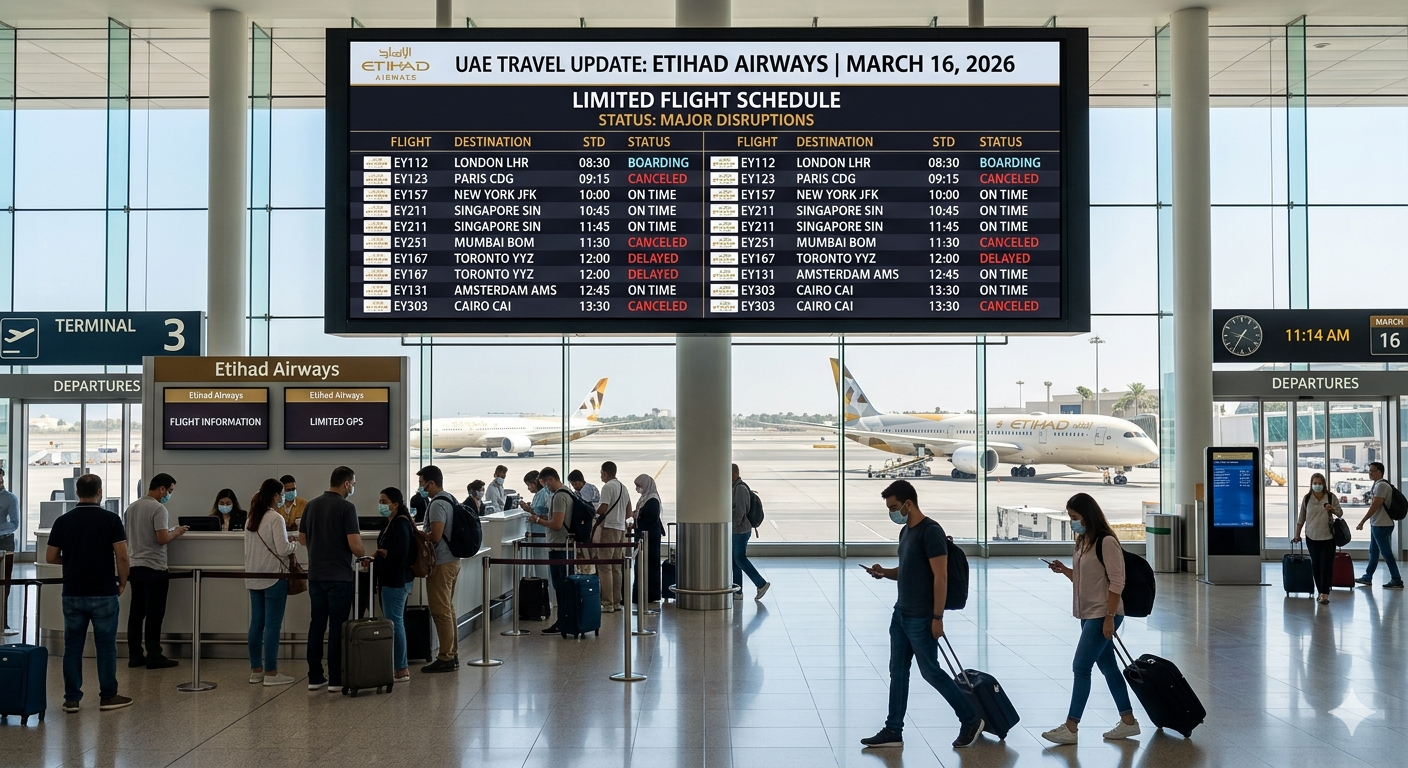
UAE Travel Update: Etihad Airways Limited Flight Schedule for March 16
