
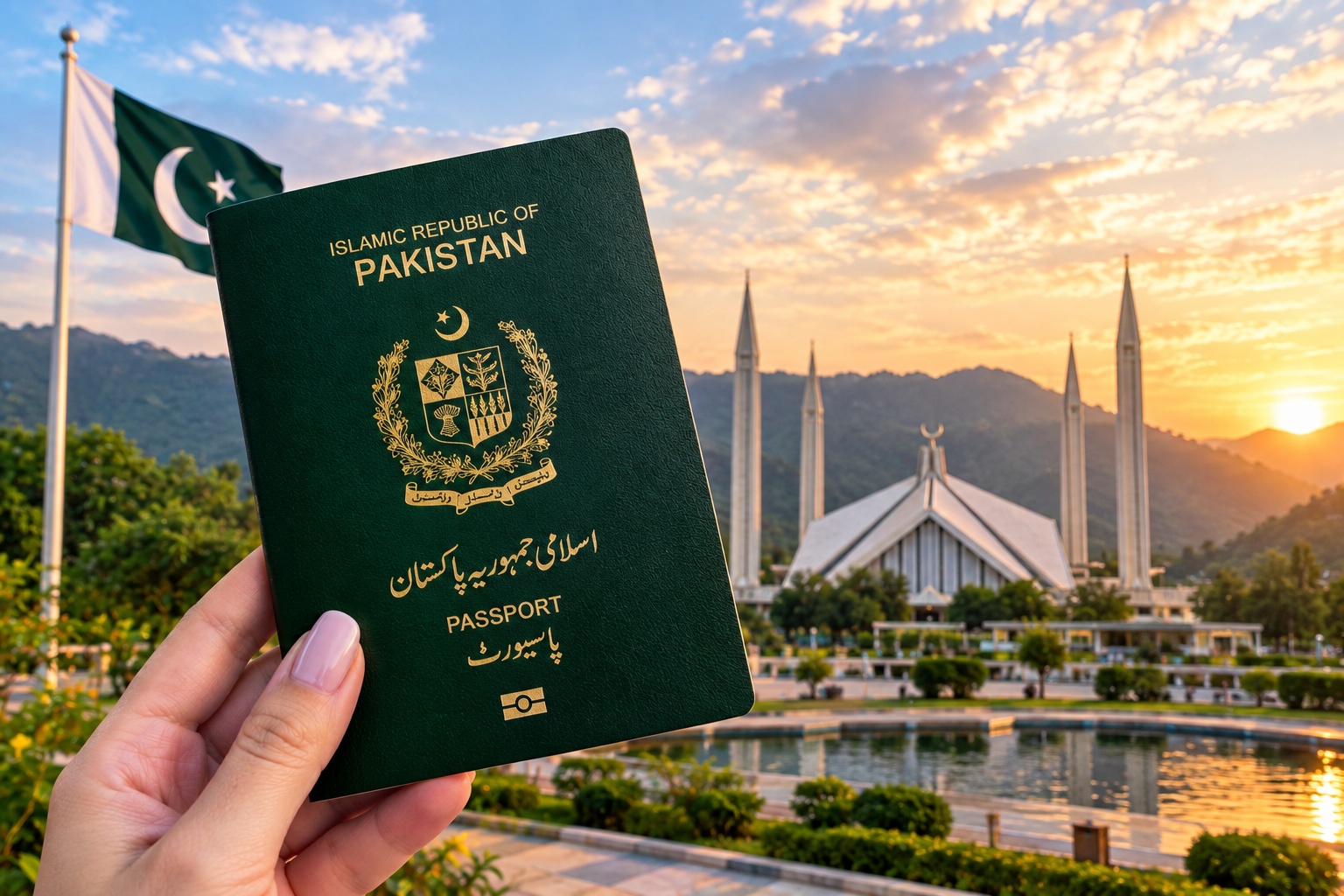
A machine-readable passport in Pakistan, usually called an MRP, is the paper-based booklet most Pakistani travellers have carried for years. That is changing. DGI&P has decided that from 15 October onward, passport offices in Pakistan and Pakistani missions abroad issue e-passports only. If you hold an MRP, you can keep travelling on it until its expiry date, and this page explains what that means for validity, renewal, fees and 2027. For other passport topics, open our Pakistan passport guide.
What Is a Machine-Readable Passport in Pakistan?
A machine-readable passport is a paper-based booklet with a machine-readable zone, or MRZ, at the bottom of the data page. Scanners read that zone at the airport, which speeds up the check at the counter. DGI&P dates the MRP to 2004. The zone also carries check digits, so a scanner can catch a misread character.
How to tell an MRP from an e-passport
Both booklets look alike at a glance, so check these three points. A quick look saves you a wrong guess when you fill in a form or prepare a renewal.
- An MRP has two lines of letters, numbers and "<" symbols at the bottom of the data page.
- An e-passport carries those two lines too, plus an embedded chip that holds your biometric details.
- An e-passport shows a small chip symbol on the cover, which an MRP does not.
What the two lines at the bottom contain
The first line holds the document type, the issuing country code and your name. The second line holds your passport number, nationality, date of birth, sex and expiry date, each followed by a check digit. A scanner recalculates those digits, and if one does not match, it flags a misread. Reading your own lines once helps you spot a typo before it follows you onto a visa form or a booking.
Machine-Readable Passport vs E-Passport: Key Differences
DGI&P describes the MRP as a paper-based document with a machine-readable zone, and the e-passport as a booklet with an embedded microchip that stores personal and biometric data. E-passport issuance has been open at all field offices since 16 August 2023. The table sets the two side by side, so you can see at once what the new booklet adds. Our page on the e-passport in Pakistan goes deeper into the chip and its security.
| Feature | Machine-readable passport | E-passport |
|---|---|---|
| Data page | Printed, with a machine-readable zone | Printed, with a machine-readable zone |
| Chip | None | Embedded chip with personal and biometric data |
| Reading at border control | Optical scan of the zone | Contactless reading of the chip |
| Security | Machine-readable zone only | Stronger, per DGI&P |
| Cost | Generally lower | Higher |
| New applications from 15 October | Not accepted | Accepted |
Is Your Machine-Readable Passport Still Valid?
Yes. Notices based on the DGI&P decision say MRPs issued before the cutoff remain valid until their stated expiry dates. Nothing forces an early swap, so you do not have to pay for a new passport today. Holders must still meet the passport-validity and entry rules of the country they visit, so check those before you book.
Once an MRP expires, it cannot be replaced with another MRP. The next passport you receive will be an e-passport. The table shows what that means in common situations.
| Your situation | What happens |
|---|---|
| MRP is valid and far from expiry | Keep using it; no action needed |
| MRP expires soon | Apply for an e-passport, since offices issue no new MRPs |
| MRP has expired | Apply for an e-passport |
| Application filed before 15 October | Check the status with your office |
| Overseas Pakistani | Contact your embassy or consulate for local steps, fees and timings |
If you do renew early, DGI&P rules still allow a full-validity passport even when your current one has time left, and you may be asked for a short statement on why. That suits anyone with a trip that needs more months on the passport, since early renewal gives you fresh validity from the new issue date.
Some overseas missions gave their own notices. The mission in the UAE, for example, advised holders with more than six months of validity left to wait and renew once the remaining validity drops below six months. Reading your mission's notice first can save you an early payment.
Renewing a Machine-Readable Passport
DGI&P rules allow renewal before expiry, and the online renewal service is open to Pakistanis in the country and abroad. After the cutoff, every renewal produces an e-passport. For the online route, see our guide to online passport renewal in Pakistan, which saves you a visit when you qualify.
Adults bring an original CNIC, NICOP or Smart Card with a photocopy, and the old passport. Government employees add an NOC, and dual nationals bring the foreign passport. The fee is paid by scanning the token's QR code, because passport offices stopped accepting cash on 1 July. The table lists the current e-passport rates for a renewal.
| Validity | Pages | Normal fee (PKR) | Urgent fee (PKR) |
|---|---|---|---|
| 5 years | 36 | 9,000 | 15,000 |
| 10 years | 36 | 13,500 | 22,500 |
| 5 years | 72 | 16,500 | 27,000 |
| 10 years | 72 | 24,750 | 40,500 |
Fast-track delivery is not offered for e-passports. The e-passport form needs a first name and a last name. The first name can run up to 50 characters, the last name up to 40, and the father's or husband's name up to 40, so check how your name fits at data entry and save yourself a correction. Offices take applications from 8:00 am to 4:00 pm, Monday to Friday, with a break from 1:00 to 1:30 pm, and they close on public holidays. DGI&P lists 21 working days for normal and 5 for urgent delivery on machine-readable passports, so ask the office for the e-passport timeline.
Lost, Damaged or Wrong Details on an MRP
A lost MRP needs a police report that quotes the old passport number. If you do not know the number, you can request it from the nearest regional passport office with a written application and a copy of your CNIC or NICOP. Having the number ready keeps the report accurate. A replacement carries a higher fee than a normal one, so confirm the amount before you pay.
A damaged passport is replaced when you submit the documents and the fee. Changing the photo means a new passport, and the old one is cancelled. To change a name, father's name or date of birth, update your CNIC or NICOP first. Expect an e-passport for these cases after the cutoff, and ask for the exact steps when you call the helpline on 051-111-344-777, since the notices do not spell them out.
Machine-Readable Passport in 2027: What to Expect
No change to passport fees for 2027 has been announced in the sources checked, so the rates above are the current ones. Fees can change, so confirm with DGI&P before you pay. A few points are already settled.
MRPs stay valid until expiry, so you may still travel on one next year if it has not expired. Any MRP that runs out in 2027 will be replaced by an e-passport, and cash stays out of passport offices. A home application through a mobile app linked to NADRA's Pak ID has been announced, with online interviews, payment through banking apps and wallets, and doorstep delivery, but no launch date. Registration with ICAO is also under way, and once it finishes, Pakistani e-passports should work with e-gates worldwide. Checking your expiry date now shows you whether 2027 is your renewal year.
Check Your Passport, Then Book Your Trip
Look at your MRP's expiry date today, so a short validity never holds back a trip you want to take. When your passport is in order, start your trip on Trips.pk and find flights, hotels, tours and visa services in one place.
Frequently Asked Questions
What is a machine-readable passport?
It is a paper-based passport with a machine-readable zone on the data page, which scanners read at border control. DGI&P dates the MRP to 2004. One scan replaces manual typing at the counter.
Is a machine-readable passport still valid in Pakistan?
Yes. An MRP issued before the cutoff stays valid until its stated expiry date. You can keep using it and renew when it expires.
Can I still apply for a machine-readable passport?
From 15 October onward, offices in Pakistan and missions abroad issue e-passports only. New applications filed after that date result in an e-passport, so applying for the e-passport directly is the way forward.
What is the difference between an MRP and an e-passport?
An MRP is paper-based with a machine-readable zone. An e-passport adds an embedded chip with personal and biometric data that border systems read contactlessly. The chip gives you stronger security.
How do I renew my machine-readable passport?
Renew at a passport office or, where you qualify, online. The new booklet will be an e-passport, with normal fees from Rs 9,000 for a 36-page, five-year booklet. Early renewal keeps your travel dates safe.