

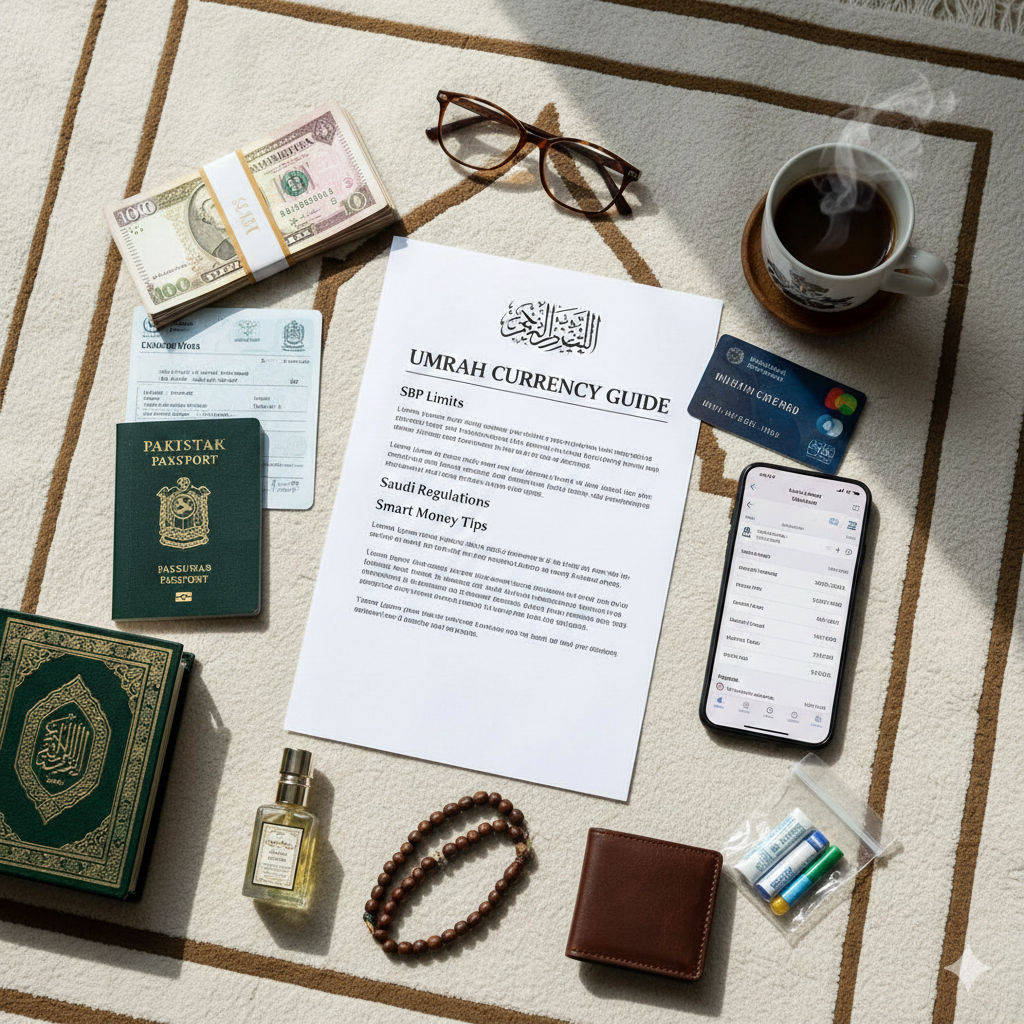
How much currency you can take when departing for umrah
24-Dec-2025
Performing the sacred pilgrimage of Umrah is a lifelong dream for millions of Muslims. While the journey is primarily spiritual, it requires meticulous financial planning to ensure a smooth and hassle-free experience. One of the most critical questions every pilgrim asks is: "How much currency can you take when departing for Umrah?"
Understanding the legal limits for currency, the specific regulations for Umrah, and the current requirements for departing from your home country (specifically Pakistan) is essential to avoid legal complications at airports.
Currency Limits for Umrah
When departing for Umrah, you are subject to the regulations set by the State Bank of Pakistan (SBP) and the customs laws of Saudi Arabia. These rules govern how much currency you can physically carry in cash.
State Bank of Pakistan (SBP) Cash Limits
The SBP sets strict limits on the amount of foreign currency a person can carry when departing for Umrah or any other foreign travel. As of the 2025 guidelines, these limits are categorized by age:
| Category | Limit per Visit (USD or equivalent) | Annual Ceiling (USD or equivalent) |
|---|---|---|
| Adults (18+ years) | $5,000 | $30,000 |
| Minors (Under 18) | $2,500 | $15,000 |
Note: These limits apply to the total value of all foreign currency notes being carried. If you are carrying Saudi Riyals, US Dollars, or any other foreign currency, the combined value must not exceed these thresholds when departing.
Saudi Arabian Customs Regulations
Upon arrival for Umrah, you must also comply with Saudi laws. The Saudi Zakat, Tax and Customs Authority (ZATCA) requires all travelers—including those arriving for Umrah—to declare any currency, gold, or jewelry valued at 60,000 SAR or more.
Failure to declare amounts exceeding this limit can lead to a fine of 25% of the seized value for the first violation and 50% for repeat offenses.
Keywords and Financial Terms to Know
To manage your currency effectively for Umrah, you should be familiar with the following terms:
Exchange Rate: The value of one currency for the purpose of conversion to another. When departing, the PKR to SAR rate will dictate how many Riyals you get.
Foreign Exchange (FX): The global market where currency is traded.
Declaration Form: A legal document where you list the currency and valuables you are carrying when departing or arriving.
Biometric Verification: Often required in Pakistan when purchasing large amounts of foreign currency from exchange companies.
Planning Your Umrah Budget: Currency Allocation
A successful Umrah trip depends on how you allocate your currency. Even if you have an "all-inclusive" package, you will need cash for daily personal expenses.
1. Daily Sustenance and Food
While many Umrah packages include breakfast, you will need currency for lunch and dinner.
Budget meals: 20–30 SAR per day.
Mid-range dining: 50–80 SAR per day.
Al-Baik & Fast Food: A popular choice for pilgrims that is relatively easy on the currency pouch.
2. Local Transportation
If your Umrah package does not include 24/7 transport, you will need currency for:
Taxis: Short trips within Makkah or Madinah (15–30 SAR).
Haramain High-Speed Railway: A comfortable way to travel between the holy cities (approx. 150–200 SAR).
Careem/Uber: Available in Saudi Arabia and often cheaper than street taxis.
3. Ziarat (Sightseeing)
Visiting historical sites in Makkah and Madinah is a highlight of Umrah. While some tours are included in packages, private Ziarat trips require extra currency. Typically, a private van for a family costs between 150 and 300 SAR.
Smart Ways to Carry Currency for Umrah
Carrying a large amount of physical currency when departing can be risky. Modern pilgrims often use a hybrid approach to manage their currency for Umrah.
Cash vs. Digital Payments
Cash (Saudi Riyals): Essential for small shops, tips, and street food. It is recommended to carry at least 1,000–2,000 SAR in cash when departing.
Debit/Credit Cards: Most major malls and hotels in Makkah and Madinah accept international cards. Ensure your bank has enabled international transactions before departing.
Travel Cards: Some banks offer multi-currency cards that allow you to lock in an exchange rate for your Umrah trip.
Procedures When Departing from Pakistan
When you are at the airport departing for Umrah, follow these steps regarding your currency:
Keep Receipts: Always keep the receipts from the exchange company where you bought your currency.
Declare if Necessary: If you are carrying amounts close to the legal limit, be prepared to show documentation.
Security: Divide your currency into different pockets or bags. Do not keep all your currency in one place during the Umrah journey.
Prohibited Items and Currency
While focusing on currency, remember that departing with certain items is strictly prohibited. This includes:
Excessive amounts of local Pakistani currency (usually limited to PKR 10,000).
Prohibited medicines without a prescription.
Items intended for commercial sale without a trade license.
Frequently Asked Questions (FAQ)
Q1: Can I take more than $5,000 for Umrah if I am traveling with family?
The $5,000 limit is per person. If you are departing as a family of four adults, you can collectively carry up to $20,000 worth of currency. However, each person must be responsible for their own portion of the currency.
Q2: What is the best currency to take for Umrah?
While US Dollars are widely accepted for exchange, it is most convenient to carry Saudi Riyals (SAR). This saves you from having to find an exchange booth immediately after departing the plane and arriving in the Kingdom.
Q3: Do I need to show my Umrah visa to buy currency?
Yes, in Pakistan, exchange companies usually require your original CNIC and a copy of your Umrah visa/passport to sell you foreign currency exceeding certain amounts.
Currency Tips for Umrah
To summarize, managing your currency when departing for Umrah requires a balance of legal compliance and practical budgeting.
Check the current SBP limits before departing.
Convert a portion of your currency to Saudi Riyals in advance.
Use digital payments for large purchases to reduce the cash you carry.
Keep all exchange receipts safe until you return from Umrah.
By following these guidelines, you can focus on the spiritual essence of your Umrah without worrying about currency or customs issues during your journey.
Would you like me to create a printable packing checklist specifically for your Umrah trip?
Related News
-
06-Apr-2020
After The Umrah Ban by Saudi Arabia, Hajj Ban Seems Likely
-
29-Jun-2020
Pakistan Government Re-Opened Kartarpur Corridor For Sikh Pilgrims
-

06-Aug-2021
Precautions to take while travelling Covid Edition
-
14-Apr-2025
Umrah Entry Closed Until Further Notice in Saudi Arabia
-
20-May-2020
Top 5 Things Pakistani Airports Should Learn And Improve
-
.jpeg)
11-Dec-2025
URGENT MANDATE FOR PRIVATE HAJJ ORGANIZERS (PHOs) FOR HAJJ 2026
-
17-Aug-2025
Top Ziarat and Holy Places in Makkah to Visit During Umrah
-
06-Aug-2020
The Best and Easy Way to Get Uzbekistan Visa From Pakistan
-
16-Jan-2024
New Year Brings New Visa Rules for Pakistanis
-
01-Jul-2025
July 2025 Update: Navigating Passport Fees in Pakistan – Normal vs. Urgent
-

05-Nov-2019
Places to Visit for Ziarat in Makkah
-

21-Aug-2025
Umrah Package Prices Drop After Saudi Airline Discounts
