
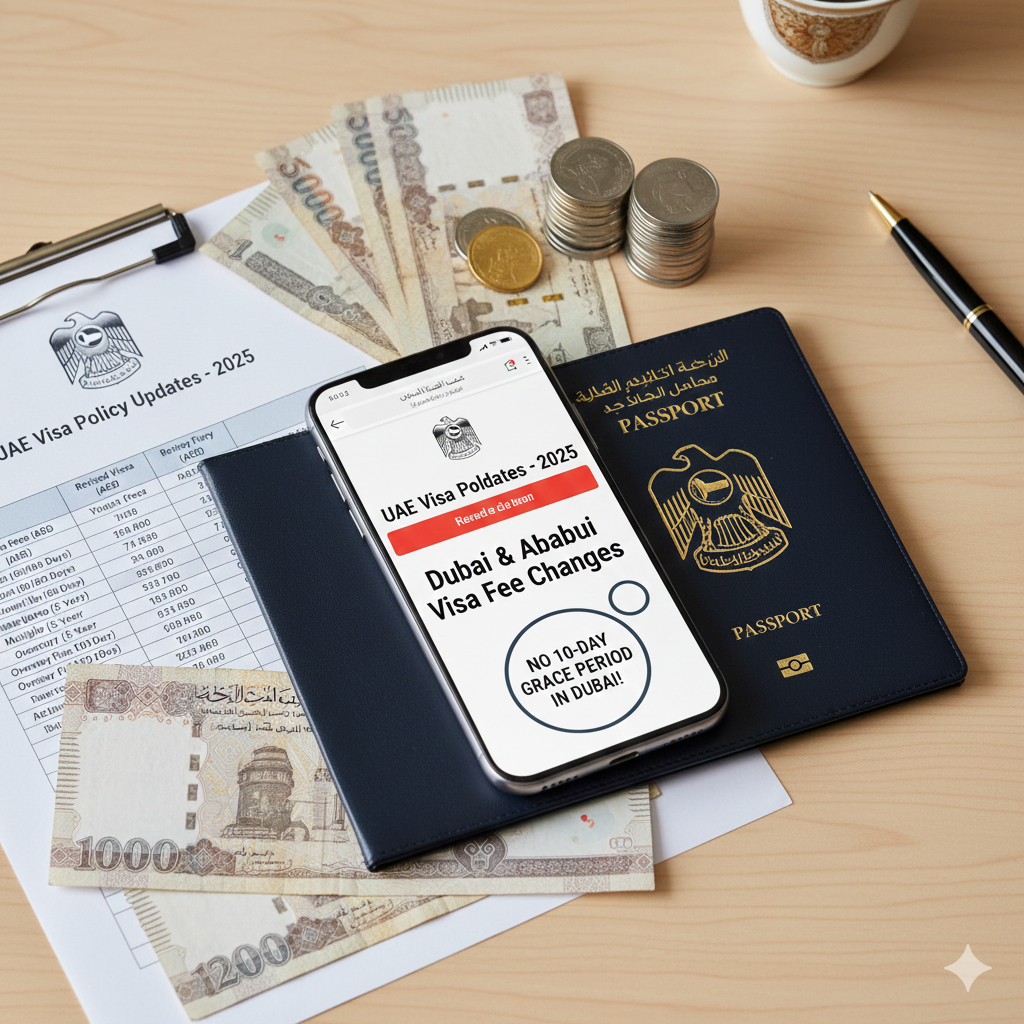
The United Arab Emirates (UAE), anchored by the major global hubs of Dubai and Abu Dhabi, has continuously refined its immigration and entry permit framework. The latest visa fee changes and regulatory updates, particularly in 2025, are designed to enhance flexibility for visitors and streamline the application process for both tourist and resident visas. These changes in the visa policy directly impact the cost and duration of stays for individuals planning to visit Dubai or Abu Dhabi.
Key Visa Fee Changes and New Fee Structures in 2025
The most significant updates to visa fees in Dubai and Abu Dhabi center around the introduction of a more diverse range of visit visa of Dubai durations, standardized fines, and specific fees for applications processed inside the UAE. These changes affect the total cost of securing an entry permit.
Standardisation and Increases in Visa Fees
The overall structure of visa fees has seen adjustments, with the final cost dependent on the type and duration of the visa.
- Standard Service Fee Increase: The UAE government has increased a general service fee by AED 100, affecting various residence and visit visa applications.
- Application Inside UAE Fee: For visitors in Dubai or Abu Dhabi seeking to extend their visit visa or adjust status without leaving the country, an additional processing fee of approximately AED 500 is now applied.
- Knowledge and Innovation Dirham Fees: Small, non-refundable government charges (the Knowledge Dirham and Innovation Dirham) are typically set at AED 10 each and are added to most visa transactions.
Approximate Tourist Visa Fees (Base Fees)
Tourist visas remain the most popular category for visitors to Dubai and Abu Dhabi. The visa fees have been adjusted to reflect the new flexibility in stay duration.
| Visa Type | Initial Stay Duration | Approx. Base Fee (AED) | Extension Fee (Approx. AED) |
|---|---|---|---|
| Single-Entry Tourist Visa | 30 Days | AED 200 – 370 | AED 600 (plus add-ons) |
| Single-Entry Tourist Visa | 60 Days | AED 300 – 510 | AED 600 (plus add-ons) |
| Single-Entry Visit Visa (Relative/Friend) | 90 Days | AED 400 (plus security deposit) | AED 600 (plus add-ons) |
| 5-Year Multiple-Entry Tourist Visa | 90 days per visit (max 180 days/year) | AED 650 (plus financial guarantee) | N/A |
Note: The total cost of a visa for Dubai or Abu Dhabi can vary based on the service provider (airline, travel agent, GDRFA/ICP) and additional mandatory charges like VAT and processing fees. It's crucial to confirm the final visa fee when applying.
Critical Changes to Grace Periods and Overstay Fines
One of the most vital visa changes for all travellers to the UAE—particularly in Dubai and Abu Dhabi—relates to the strict new rules on overstaying. These changes impose immediate and standardized financial penalties.
The Removal of the 10-Day Grace Period in Dubai
Dubai has eliminated the previous 10-day grace period for tourist and visit visa holders. Key points:
- Immediate Fines: Fines start accruing immediately after the visa expiration date.
- Standardised Fine: The overstay fine has been standardised across the UAE at AED 50 per day.
This change makes pre-emptive planning for departure or visa extension essential to avoid unexpected costs and travel complications.
Residence Visa Grace Period
Residence visa holders (including those in Abu Dhabi and Dubai) generally have a longer grace period after cancellation or expiry—typically 30 to 60 days—though Golden/Green Visa holders may have up to 180 days. The overstay fine of AED 50 per day applies after the applicable grace period.
New Visa Types and Categories in Dubai and Abu Dhabi
Beyond fee changes, the UAE has introduced new visa categories to attract talent, remote workers, and investors, expanding the range of entry permits available.
The 5-Year Multiple-Entry Tourist Visa
This visa allows multiple entries over five years:
- Duration: Maximum stay of 90 days per visit, extendable, with total stay not to exceed 180 days in a single year.
- Cost: Approx. AED 650 (plus service fees).
- Requirement: Applicants must demonstrate a bank balance of USD 4,000 (or equivalent) over the last six months.
Green Visa and Golden Visa
Long-term residency visas (Green/Government and Golden) offer 5- and 10-year options respectively, enabling self-sponsorship for skilled professionals and investors. Fees are higher but reflect long-term residency benefits.
Visa Extension Process and Costs
Extending a tourist or visit visa from within Dubai or Abu Dhabi is possible but involves specific fees and requirements. Extensions are managed through the Federal Authority for Identity and Citizenship (ICP) or GDRFA in Dubai.
Costs Associated with Visa Extensions
The cost of extending a visa in the UAE must be paid before the current visa expires to avoid the AED 50 per day overstay fine.
| Fee Component | Approximate Cost (AED) | Notes on the Fee |
|---|---|---|
| Base Visa Extension Fee | AED 600 | Main cost for extending a visit visa for an additional 30 days. |
| Inside UAE Processing Fee | AED 500 | Applicable if processed while the visitor is in Dubai or Abu Dhabi. |
| Application Fee | AED 100 | Standard application charge. |
| Dirham Fees (Knowledge/Innovation) | AED 20 | Mandatory government charges. |
| Total Approximate Cost | AED 1,220 | Final fee may vary slightly. |
A visitor in Dubai or Abu Dhabi can usually apply for up to two extensions of 30 days each, provided their original visa type allows it. The total cost of multiple extensions can accumulate quickly.
Traveller Advice for Dubai and Abu Dhabi
- Check Eligibility: Verify specific visa requirements and eligibility (including visa on arrival) before departure.
- Confirm Fees: Visa fees may vary between GDRFA-Dubai and the federal ICP portal; confirm the exact cost at the time of application.
- Monitor Expiry: With the removal of the grace period in Dubai, monitor visa expiry carefully to avoid the AED 50/day fine.
- Proof of Funds: Be prepared to provide proof of financial means (e.g., bank statements) for many visit visa categories.
The Dubai & Abu Dhabi visa fee changes in 2025 are part of a broader UAE visa policy intended to make travel and longer-term stays more flexible yet more regulated, ensuring a clearer (though sometimes costlier) pathway for entry.
Related News
-
20-Aug-2025
Advice to Pilgrims Regarding the Black Stone
-
31-Aug-2025
September Deals on Hotels in Makkah Offer Affordable Umrah Packages
-

26-Dec-2024
Hiring of Services for Moavineen/ Nazims for Hajj 2025 Announced
-

12-Jun-2025
Germany Opens New Doors: Faster and More Accessible Visas for Pakistanis in 2025
-

11-Oct-2024
Umrah on budget: Tips to Save Money without Compromising the Experience
-

22-Nov-2025
PIA Airline and Biman Seal Strategic Cargo Pact
-

29-Sep-2025
The Updated US Visa Waiver Program (VWP) 2025 – Eligible Countries and Essential Information
-
30-Apr-2025
Pakistan Airports Security Enhanced Due to India-Pakistan Tensions
-
08-May-2019
48 Hours in Lahore (X)
-
.jpeg)
11-Dec-2025
URGENT MANDATE FOR PRIVATE HAJJ ORGANIZERS (PHOs) FOR HAJJ 2026
-

18-Mar-2020
Civil Aviation Authority Decides to Start International Flights Operation
-

06-Sep-2025
12 Rabi ul Awwal Celebrations in Pakistan and Worldwide – A Day of Blessings
