
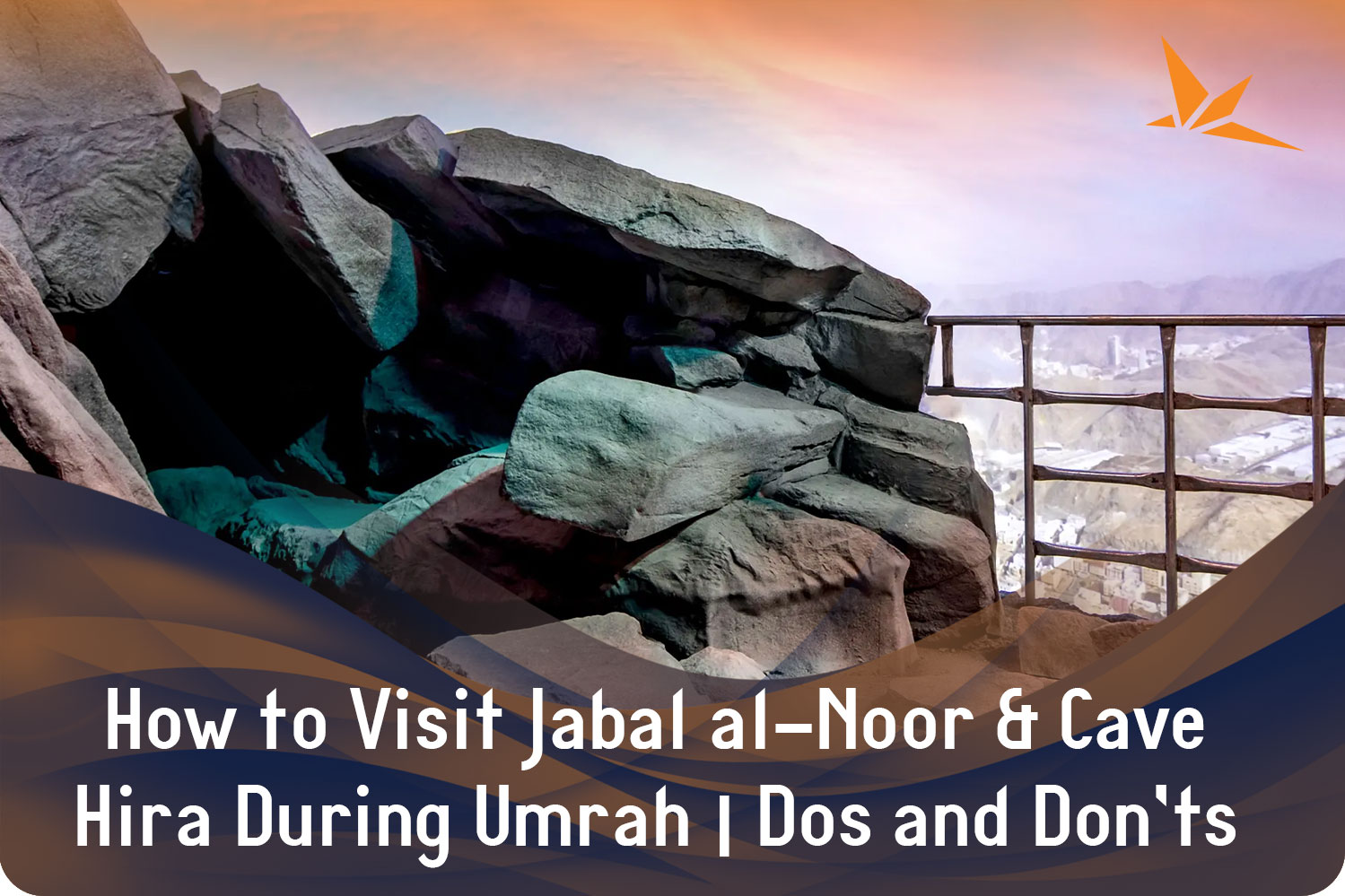
Visiting Jabal al-Noor and Cave Hira is a deeply spiritual experience for many pilgrims performing Umrah. Located just outside Makkah, this sacred mountain is where the first revelation of the Holy Quran was sent to Prophet Muhammad (PBUH). While the visit is not part of Umrah rituals, many pilgrims—especially those on an Umrah trip from Pakistan—choose to visit Cave Hira to reflect, pray, and connect with Islamic history.
This guide explains how to visit Jabal al-Noor safely, the best time to go, what to expect, and important dos and don’ts to follow.
What Is Jabal al-Noor and Why Is It Important?
Jabal al-Noor (Mountain of Light) is home to Cave Hira, where Angel Jibreel (AS) revealed the first verses of the Holy Quran to Prophet Muhammad (PBUH). The cave is small, simple, and humble—reminding visitors of the Prophet’s devotion, patience, and solitude.
For many pilgrims, visiting this site is a moment of deep reflection rather than a physical achievement.
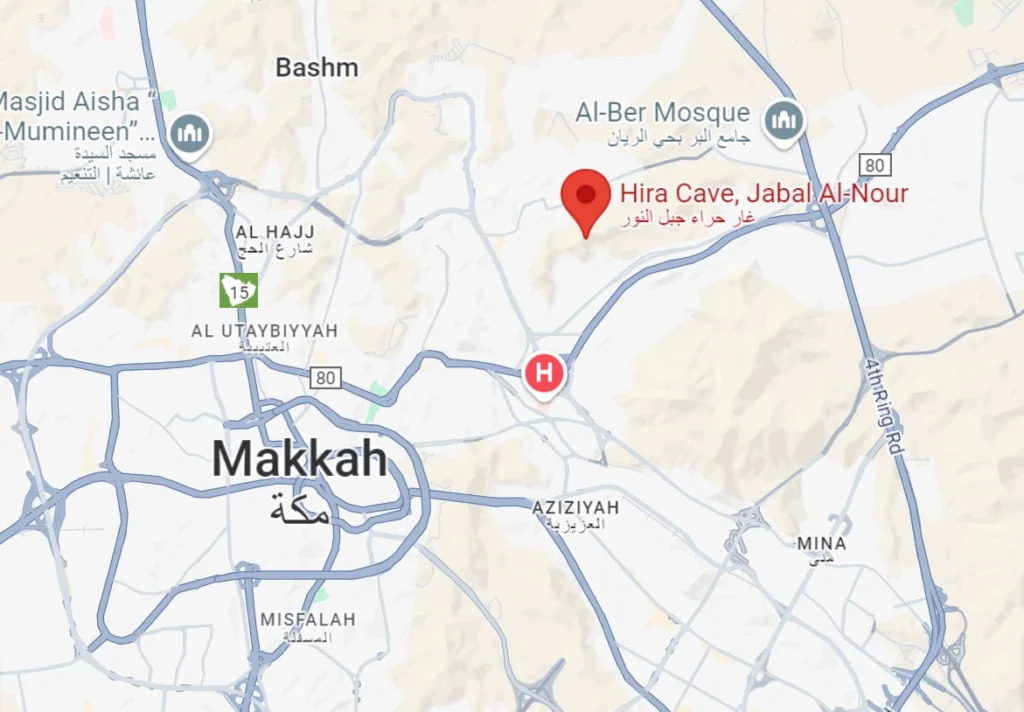
Location and Distance from Masjid al-Haram
- Distance from Masjid al-Haram: Approximately 4 km
- Travel time by car: 10–15 minutes
- Nearest area: Hira Cultural District
Most Pakistan Umrah packages do not include the hike automatically, but local taxis or ride-hailing services can easily take you to the base.
Best Time to Visit Jabal al-Noor
Choosing the right time is essential for safety and comfort.
Recommended times:
- Early morning (after Fajr)
- Late evening (after Isha)
Avoid:
- Midday hours due to extreme heat
- Peak Umrah seasons without preparation
Pakistani pilgrims unfamiliar with Makkah’s terrain should avoid climbing during hot afternoons.
How to Reach the Base of Jabal al-Noor
- Take a taxi or ride-hailing service from your hotel
- Ask for “Jabal al-Noor” or “Hira Cultural District”
- You’ll reach the base parking area
- The hike begins from there
There is no vehicle access beyond the base.
How Difficult Is the Climb?
- Duration: 45–90 minutes (one way)
- Difficulty: Moderate to challenging
- Terrain: Rocky, uneven steps
The climb requires basic fitness. Elderly pilgrims, heart patients, or those with knee issues should not attempt the climb.
What to Carry for the Climb
Carry only essentials:
- Comfortable walking shoes (non-slip)
- Small backpack
- Water bottle
- Light snacks (optional)
- Mobile phone with flashlight
- Cap or scarf
Avoid carrying valuables or heavy items.
What to Expect at Cave Hira
- The cave is very small
- Only 2–3 people can enter at a time
- No lighting inside
- No space for group prayers
Most pilgrims spend a few minutes inside, recite duas quietly, and reflect.
Dos and Don’ts When Visiting Jabal al-Noor
✅ Dos
- Wear comfortable, modest clothing
- Go with a companion or group
- Stay hydrated
- Move slowly and carefully
- Keep the area clean
- Show patience and respect to others
- Remember this visit is optional, not obligatory
❌ Don’ts
- Don’t believe climbing guarantees extra reward
- Don’t push, rush, or argue with others
- Don’t litter or damage rocks
- Don’t attempt the climb if unwell
- Don’t perform loud or group prayers inside the cave
- Don’t visit during extreme heat
Religious Clarification (Important)
Visiting Cave Hira is not part of Umrah or Sunnah. There is no special dua prescribed for this place. The visit should be done only for reflection, not with the belief that it carries additional religious obligation or reward.
Understanding this helps pilgrims avoid misunderstandings during their Umrah journey.
Should You Visit Jabal al-Noor During Umrah?
If you are physically fit, well-prepared, and visiting during suitable weather, the experience can be spiritually uplifting. However, Umrah itself should always remain the main focus of your trip.
Many experienced scholars advise prioritizing prayers in Masjid al-Haram over physically exhausting activities.
Visiting Jabal al-Noor and Cave Hira during your Umrah trip can be a meaningful experience when done with the right intention, preparation, and respect. For pilgrims traveling from Pakistan, understanding the terrain, climate, and religious context is especially important.
Plan wisely, stay safe, and remember that the true essence of Umrah lies in sincerity, humility, and devotion.
Related News
-
12-Dec-2019
Best Places to Visit in Islamabad in a Single Day
-
16-May-2019
The Rise of Tour Operators in Pakistan
-
24-Aug-2025
Punjab Approves Sky Walk Glass Bridge: A remarkable new attraction in Murree
-
19-Feb-2026
Economy Ramadan Umrah Package 2026: Your Essential Budget Guide
-

20-Apr-2025
Riyadh Air Reveals Lavish Cabin Interiors Ahead of Late 2025 Launch
-

22-Oct-2021
Maldives Honeymoon Best Packages 2021 from Pakistan
-
15-Dec-2022
UAE Changes Visit Visa Extension Policy
-
17-Dec-2025
difference between a group umrah and a customized umrah package
-
20-Mar-2025
Service Charges of Munazzamat for Hajj 2025
-

20-Oct-2025
Maldives Luxury Resorts: Private Butler for Your Romance
-

08-Sep-2025
Budget-Friendly Turkey Tour Packages with Direct Flights from Pakistan
-

15-Dec-2025
New Umrah Visa Rules Announced for 2026 Pilgrims
