
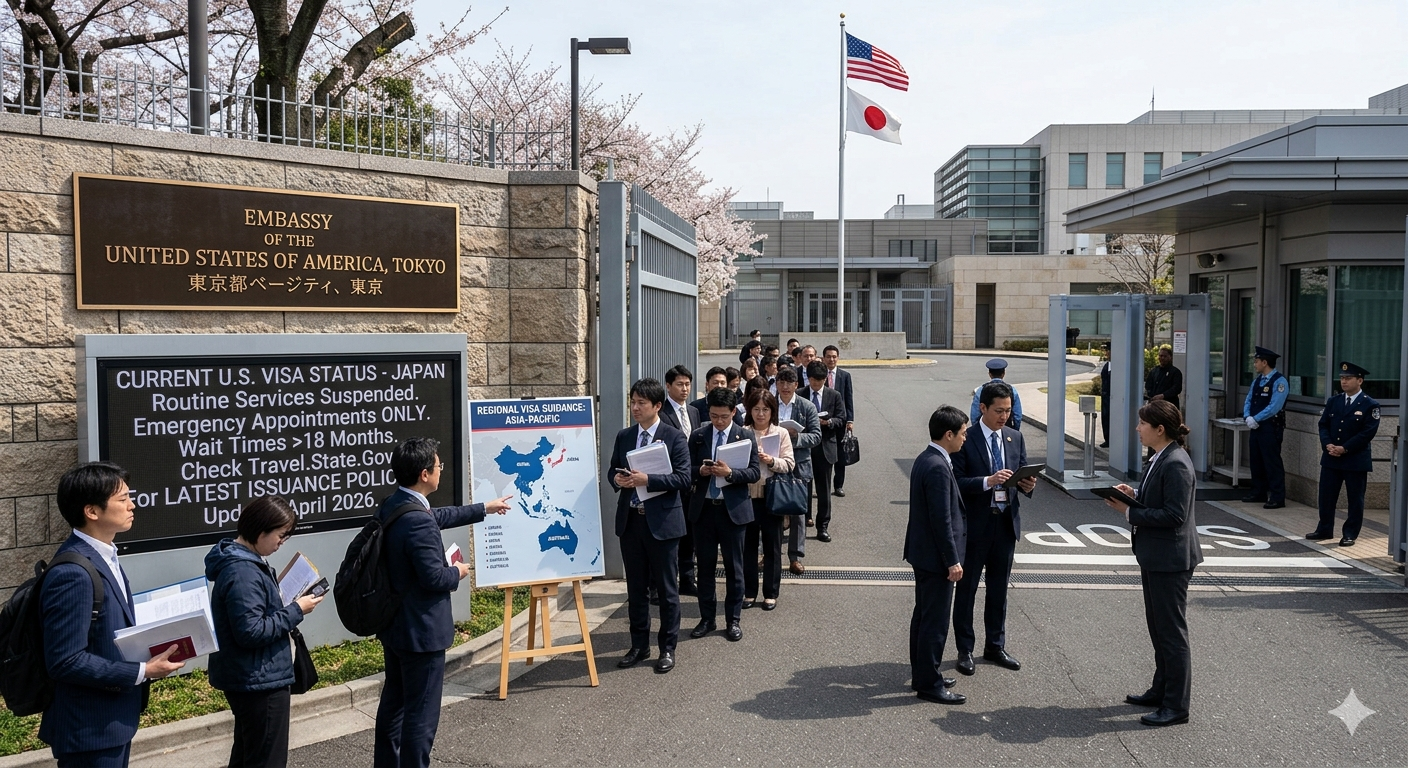
The landscape of U.S. visa services in April 2026 is defined by a complex interplay of rigorous new security protocols, significant visa appointment wait times, and strategic shifts in the Visa Bulletin. For travelers, workers, and families, understanding the current status of U.S. visa services by country is no longer just helpful—it is a mechanical necessity for successful entry into the United States.
1. Global Overview: The "New Normal" for Visa Issuance
As of April 2026, the Department of State (DOS) and USCIS have implemented sweeping changes under two major Presidential Proclamations (10949 and 10998) effective since January 1. These policies have created a bifurcated system where visa issuance is heavily dependent on an applicant's nationality and the specific security tier of their home country.
High-Risk Countries and Full Suspensions
For nationals of countries designated as "high-risk," visa services are currently facing a total or partial freeze. This is not merely a delay but an administrative pause on the issuance of new visas, affecting both immigrant and nonimmigrant categories.
Full Suspension Countries: Afghanistan, Eritrea, Haiti, Iran, Libya, Niger, Somalia, South Sudan, Sudan, Syria, and Yemen.
Partial Restrictions: Cuba, Nigeria, Venezuela, and Zimbabwe.
Important Note: For applicants from suspended regions, such as Afghanistan, visa services are often redirected. For instance, U.S. Embassy Islamabad has been designated to process immigrant visas for Afghan residents, though visa appointment wait times in Pakistan remain some of the longest in the world.
2.Visa Appointment Wait Times in 2026
The visa appointment wait time remains the most significant hurdle for nonimmigrant travelers. While some European and Oceanic posts have returned to efficiency, major hubs in Asia and North America are struggling with unprecedented backlogs.
Comparative Wait Times by Region
| Region/Country | Average Wait Time (B1/B2) | Status of Services |
|---|---|---|
| India (Mumbai/Delhi) | 6 – 12 Months | High demand; routine services resumed. |
| Canada (Toronto/Calgary) | 18 – 24 Months | Among the longest visa appointment wait times globally. |
| UAE (Dubai/Abu Dhabi) | 4 – 8 Weeks | Relatively faster; popular for third-country nationals. |
| Brazil (Rio/São Paulo) | 3 – 5 Months | Routine services; strict document verification in place. |
| China (Beijing/Guangzhou) | 2 – 4 Months | Limited appointments; new interview requirements for minors. |
3. The April 2026 Visa Bulletin: Opportunities and Obstacles
The April 2026 Visa Bulletin has introduced surprising forward movement, particularly in the EB-2 and EB-3 categories. Interestingly, the Department of State attributes this "advancement" to the decreased visa issuance rates in countries currently under the January 1 travel restrictions. Essentially, unused visa numbers are being redistributed to other chargeability areas.
Employment-Based (EB) Highlights
EB-2 Advancement: For the "Rest of World" (ROW), Mexico, and the Philippines, EB-2 has become "Current." This allows applicants with an approved I-140 to move immediately toward final adjudication.
India and China Constraints: While India saw a 10-month jump in EB-2 Final Action Dates, the backlog remains substantial.
Dates for Filing: USCIS continues to honor the Dates for Filing chart, providing a critical window for those in the U.S. to file for Adjustment of Status, securing work authorization (EAD) and travel documents while they wait.
4.Country-Specific Updates
The current status of U.S. visa services by country varies based on local security and staffing.
China: New Interview Mandates
Effective June 2025 and continuing into April 2026, the interview waiver process has been largely eliminated for applicants under age 14 in China. Parents must now bring original household registration books (hukou) and birth certificates to in-person interviews, significantly increasing the processing burden for families.
Colombia and Brazil: Document Rigidity
U.S. Embassy Bogotá and the consulates in Brazil have resumed routine visa services, but they have implemented a "zero-tolerance" policy for missing documents. Applicants arriving at a visa appointment without original civil documents are being turned away without an interview, further exacerbating their individual visa appointment wait time.
Canada: The Backlog Crisis
Canada currently hosts some of the most extreme visa appointment wait times in the world. Travelers in Toronto and Vancouver frequently face wait times exceeding two years for simple visitor visas. Applicants are increasingly looking to Mexico or the Caribbean for third-country processing to bypass these delays.
5. Strategic Advice for Applicants
To successfully navigate U.S. visa services in this environment, applicants should adopt a multi-layered strategy:
Monitor the Visa Bulletin Monthly: Even small shifts in the April 2026 Visa Bulletin can open filing windows that may close just as quickly.
Leverage Premium Processing: For employment categories like O-1, L-1, or EB-1, paying the additional fee for 15-day processing is the only way to ensure a predictable timeline before reaching the consular stage.
Check Post-Specific Alerts: Each embassy website has a "Visa Status" ticker. Because the current status of U.S. visa services by country can change overnight due to local "high-risk" designations, daily monitoring is advised.
Prepare for Enhanced Vetting: Under "Operation PARRIS," USCIS and DOS are now conducting deeper social media and financial reviews. Ensure your digital footprint is consistent with your application data to avoid long administrative processing holds.
The visa appointment wait time is currently the primary bottleneck of the U.S. immigration system. By understanding the specific current status of U.S. visa services by country and acting on the favorable dates in the April 2026 Visa Bulletin, applicants can mitigate some of the uncertainty defining travel and immigration this year.
Related News
-

05-Aug-2024
PIA Starts Direct Flights To Jeddah from Faisalabad To Facilitate Pilgrims
-

05-Jan-2026
Big shockers in Saudi arabai you should know before departing for umrah (no calls on whatsapp, good traffic)
-

23-Mar-2023
Umrah appointment is a must to perform Umrah
-
09-Apr-2020
Is Countries That Have Reported No Case Of Coronavirus
-
22-Feb-2026
Malaysia Tour Packages Drive Record Tourism Growth in 2025
-

03-Jul-2020
Top 5 Activities to Do in Murree With Minimum Budget
-

12-Jan-2026
Why Umrah Travel Is Extremely Popular in Pakistan
-

23-May-2023
Lahore-Skardu flights to start again by PIA
-

08-Aug-2020
The Gilgit Government Decides To Resume the Tourism In Gilgit Baltistan After 5 Months
-

01-Feb-2025
PIA to Resumes Direct Flights to London and Manchester
-

27-Oct-2021
List of countries that Thailand drop quarantine
-

30-Oct-2025
How to Choose Between a Beach Villa & Overwater Villa in the Maldives
