
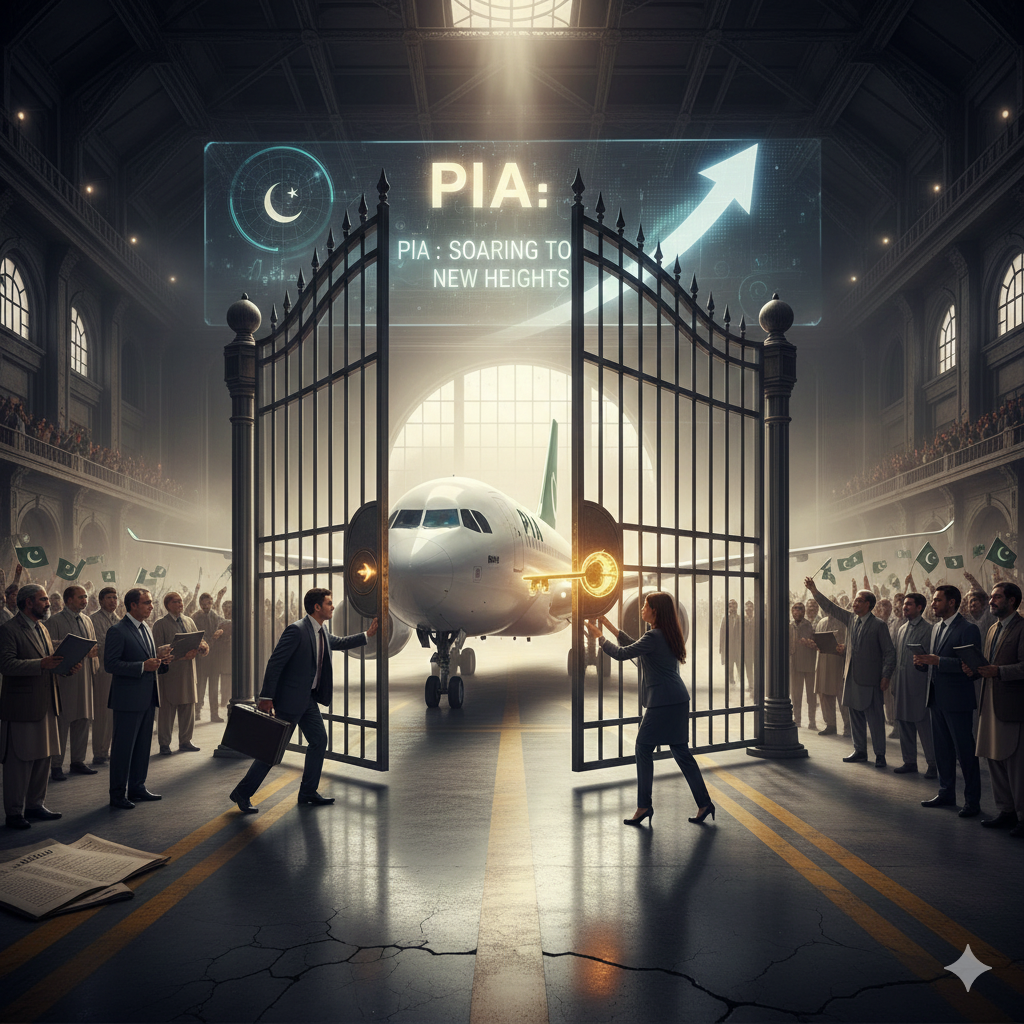
In a decisive move aimed at altering the trajectory of its aviation sector, the government has announced that it will sell 75% stake in national flag carrier PIA. This high-stakes divestment represents a significant shift from previous strategies, moving away from partial sales toward a structure that offers private investors comprehensive control. For a debt-ridden airline that has struggled with losses, mismanagement, and operational bans, the decision to sell 75% stake in national flag carrier PIA is being hailed by officials as the only viable path to a sustainable revival.
The upcoming bidding process, scheduled for December 23, 2025, marks the beginning of a phased exit for the state. While the initial offer is to sell 75% stake in national flag carrier PIA, the transaction includes a "green shoe option" allowing the successful bidder to acquire the remaining 25% later, effectively leading to a 100% privatization of the airline.
The Economic Catalyst: Why the Sale is Happening Now
The primary driver behind the move to sell 75% stake in national flag carrier PIA is the staggering financial burden the airline places on the national exchequer. With accumulated losses exceeding $2.5 billion, the status quo had become untenable under the reform pressures of the $7 billion IMF program.
Key Reasons for Privatization
Fiscal Bleeding: PIA has relied on billions in government bailouts for decades, draining funds that could be used for public infrastructure.
IMF Reform Pressure: Privatizing state-owned enterprises (SOEs) is a critical condition for Pakistan’s ongoing economic stabilization plan.
Operational Revival: The government lacks the capital required to revamp an aging fleet; hence, the decision to sell 75% stake in national flag carrier PIA aims to bring in private equity for modernization.
Transaction Structure: A New Deal for Investors
Unlike previous failed attempts, the current framework to sell 75% stake in national flag carrier PIA is designed to be "investor-friendly." Bidders demanded full managerial control, leading the government to increase the offered share from the originally planned 60% to a more substantial 75%.
Comparison of Previous vs. Current Privatization Attempts
| Feature | Previous Attempt (2024) | Current Plan (Dec 2025) |
|---|---|---|
| Stake Offered | 60% | 75% (with 100% option) |
| Investor Control | Partial/Shared | Complete Managerial Control |
| Cash to Exchequer | 15% of bid | 7.5% of bid |
| Reinvestment | Minimal | 92.5% injected into PIA |
| Debt Status | Integrated | Rs 654 billion parked in a holding co. |
The decision to sell 75% stake in national flag carrier PIA with such a high reinvestment ratio (92.5%) signals that the government's priority is the airline’s survival over immediate cash gains for the treasury.
Roadmap for the Future: Fleet and Route Expansion
The business plan accompanying the move to sell 75% stake in national flag carrier PIA is ambitious. By offloading management to the private sector, the government expects the airline to undergo a rapid transformation over the next four years.
Fleet Modernization: The plan aims to increase the number of airworthy aircraft from the current 18 to 38 by 2029.
Route Network Extension: PIA currently serves 30 cities. Post-privatization, this is expected to grow to 40 destinations, capitalizing on the recent clearing of international routes to the UK and Europe.
Branding Continuity: Despite the move to sell 75% stake in national flag carrier PIA, the government has stipulated that the name and branding of the airline must remain unchanged to preserve its national identity.
Shortlisted Bidders and Market Sentiment
As the December 23 deadline approaches, four major consortia have been pre-qualified to bid. These include industrial giants such as the Lucky Cement Consortium, Arif Habib Corporation, Fauji Fertilizer, and Air Blue. The high level of interest from these local powerhouses suggests that the move to sell 75% stake in national flag carrier PIA is viewed as a high-potential turnaround opportunity.
Potential Impact on Employees
While the prospect of efficiency excites economists, it brings anxiety to the airline's workforce. The government has assured that safeguards for workers' rights will be included in the final terms. However, history shows that such large-scale privatizations often involve "Golden Handshake" schemes to address overstaffing issues.
Conclusion: A High-Stakes Departure
The decision to sell 75% stake in national flag carrier PIA is more than just a financial transaction; it is a test of Pakistan's resolve to reform its economy. If successful, the privatization could serve as a blueprint for other struggling state enterprises. By choosing to sell 75% stake in national flag carrier PIA, the state is betting that private sector agility can restore the "Great People to Fly With" to their former glory.
Would you like me to create a detailed breakdown of the four pre-qualified consortia and their respective business backgrounds?
Related News
-

23-Jan-2026
Group Umrah vs Customized Umrah Packages: Which One Is Right for You?
-
02-Aug-2021
Thousands of Animal Human Bones in Saudi Arabia Cave
-

14-Oct-2025
How to Stay Focused and Peaceful During Umrah
-

09-Dec-2024
Submit Your Hajj Application Before Tomorrow’s Deadline
-
22-Mar-2022
400,000 Umrah Pilgrims Welcomed by Saudi Arabia in Ramadan
-

21-Apr-2025
Why a Honeymoon in Maldives is the Ultimate Choice for Newlyweds
-
03-Nov-2023
Breaking News: Hajj Flights from Pakistan 2024 - Key Dates and Details Revealed!
-

27-Jul-2022
Umrah Rules and Travel Update 2022 from Pakistan
-

15-Mar-2022
Umrah Rules for Children
-
.webp)
02-May-2025
UK Welcomes More International Students: A Positive Sign for Travelers and the Economy
-

19-Feb-2025
Arrangement for Sighting the Moon of Ramadan-ul-Mubarak 1446 A.H/2025
-

25-Nov-2020
Which Company Provides The Best Tours in Pakistan
