
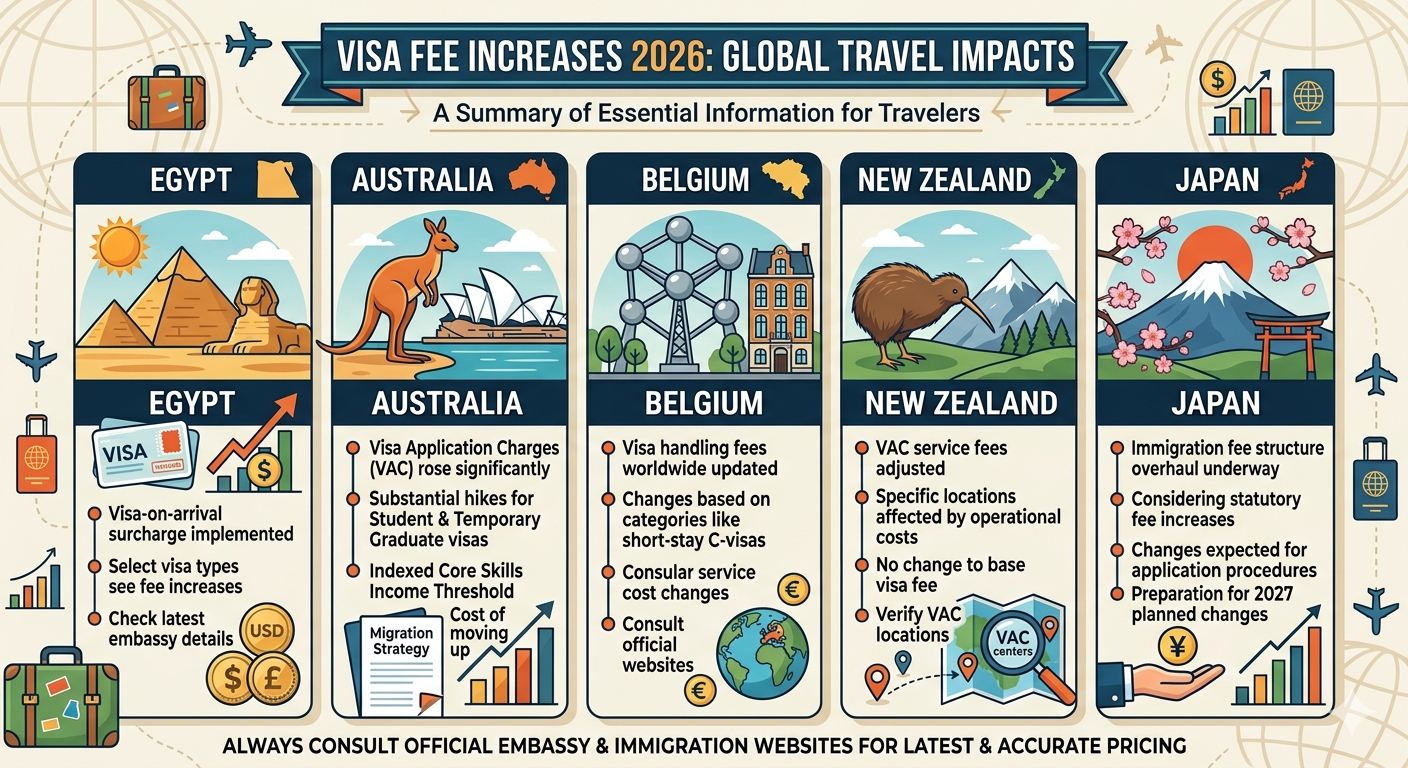
The landscape of international travel is shifting significantly as we move through 2026. For globetrotters, digital nomads, and international students, the cost of entry is rising across several major destinations. Whether you are planning a sunset cruise on the Nile, a study semester in Melbourne, or a business trip to Tokyo, understanding these financial adjustments is critical for accurate budgeting.
This detailed guide breaks down the visa fee increases and immigration cost adjustments in Egypt, Australia, Belgium, New Zealand, and Japan for 2026.
Egypt: Updated Visa-on-Arrival Surcharges
As of March 1, 2026, Egypt has officially adjusted its entry requirements for travelers utilizing the popular visa-on-arrival system. This change primarily affects tourists who prefer to handle their paperwork at the airport rather than applying in advance.
The New Cost Structure
Previously, the standard fee for a single-entry visa was USD 25. Under the new 2026 regulations, a USD 5 surcharge has been implemented, bringing the total cost to USD 30. Interestingly, many travelers report that the physical visa sticker still displays the "USD 25" price, but it is now accompanied by an additional "Surcharge" sticker confirming the extra payment.
Effective Date: March 1, 2026
Target: Single-entry visa-on-arrival
Payment Method: Usually required in cash (USD, EUR, or GBP)
Pro Tip: The Egypt e-Visa platform currently remains at the original price. Travelers looking to save $5 and avoid airport queues should consider applying online at least 7 days before departure.
Australia: Steep Hikes for Students and Graduates
Australia remains one of the most expensive destinations for long-term stays, and 2026 has seen a continuation of the aggressive Visa Application Charge (VAC) increases that began in mid-2025.
Significant Jump in Graduate Fees
The most dramatic change occurred on March 1, 2026, when the government doubled the fee for the Temporary Graduate Visa (Subclass 485). This move is part of a broader strategy to manage migration levels and prioritize high-skilled talent.
| Visa Category | 2025 Fee (Approx) | 2026 New Fee |
|---|---|---|
| Student Visa (Subclass 500) | AU$1,600 | AU$2,000 |
| Temporary Graduate (Subclass 485) | AU$2,300 | AU$4,600 |
| Visitor Visa (Subclass 600) | AU$195 | AU$200 |
| Partner Visa (Onshore) | AU$9,095 | AU$9,365 |
Income Thresholds for Skilled Workers
Beyond direct fees, the Core Skills Income Threshold (CSIT) and Temporary Skilled Migration Income Threshold (TSMIT) have been indexed upward to roughly AU$76,515. This means employers must pay foreign workers more to qualify for a visa, indirectly increasing the "cost" of migration for businesses.
Belgium: Annual Adjustments to Consular Fees
Belgium, acting in alignment with broader Schengen Area policies, updated its worldwide visa handling fees effective February 1, 2026. These adjustments are largely driven by inflation and the costs of maintaining digital security systems.
Breaking Down the Belgian Tariffs
Belgium categorizes its fees based on the duration of stay. While the short-stay "C-Visa" (Schengen Visa) saw a modest increase last year, the long-stay "D-Visa" has seen a more recent bump.
Short-Stay (C-Visa): €90 (Standard adult rate).
Long-Stay (D-Visa): €180 (For students, workers, and family reunification).
Administrative Contribution: This is a separate fee paid directly to the Immigration Office in Brussels. For 2026, the levy for highly skilled workers is approximately €377.
Note on Payments: By the end of March 2026, all Belgian embassies are expected to transition to 100% electronic payments. Cash will no longer be accepted for visa processing.
New Zealand: Rising Service Fees at VACs
Unlike other nations on this list, New Zealand's 2026 fee changes are focused specifically on the Visa Application Centre (VAC) service fees rather than the government’s base visa price.
Why the Change?
Immigration New Zealand (INZ) utilizes third-party partners like VFS Global to handle biometrics and document scanning. Due to rising operational costs, service fees at VACs in countries like India, the UK, the USA, and Australia increased on January 1, 2026.
Affected Applicants: Anyone requiring biometric enrolment or submitting paper applications.
Action Required: Use the INZ "Fee Finder" tool before your appointment, as VAC fees vary significantly by country and local currency exchange rates.
Japan: Preparing for a Major Fee Overhaul
Japan is currently in the midst of a historic revision of its immigration laws. While some fees were adjusted in 2025, the Japanese Diet is considering a bill in early 2026 that would raise the statutory upper limits for immigration procedures.
Potential Future Costs
The government has signaled that the current fees do not reflect the administrative burden of a record-high foreign resident population.
Permanent Residency: The current fee of ¥10,000 could see a statutory limit rise as high as ¥300,000, though the actual fee implemented in late 2026 or early 2027 is expected to be lower than that ceiling.
Change of Status/Renewal: Currently ¥6,000, with a proposed upper limit of ¥100,000.
International Tourist Tax: Discussions are ongoing to increase the departure tax from ¥1,000 to ¥3,000.
Summary Checklist for 2026 Travelers
To avoid delays or being turned away at the border, keep this checklist in mind:
Verify Payment Methods: Many countries (like Belgium) are moving to card-only systems.
Check Exchange Rates: Consular fees are often set in Euro or USD but paid in local currency; these are recalculated monthly.
Budget for "Hidden" Costs: Remember that VAC service fees, biometric fees, and administrative levies are often separate from the "visa fee" you see on government homepages.
Apply Early: With fee increases looming in Japan and Australia, submitting applications before the next fiscal quarter could save you hundreds of dollars.
Staying informed about these visa fee increases is the best way to ensure your 2026 travel plans remain seamless and stress-free.
Related News
-

13-Nov-2019
How Many People Die In Saudi Arabia during Hajj and Umrah
-
10-Mar-2020
Qatar Bans 14 Countries Including Pakistan and India
-

10-Sep-2024
WhatsApp Calls Don’t Work in UAE. Instead You Can Use These Apps for Voice and Video Calls
-

17-Jul-2019
How travel agent can save your pains and money?
-

08-Mar-2024
China to Offer Visa Free Entry to Selected Countries
-

24-Feb-2025
Women Pilgrims in 2025: New Rules for Performing Hajj Without a Mahram
-

22-May-2025
Saudi Ministers Intensify Hajj 2025 Readiness Inspections Across Key Hubs, Including Jeddah
-

10-Nov-2025
Second Installment for Government Hajj Scheme 2026
-
09-May-2025
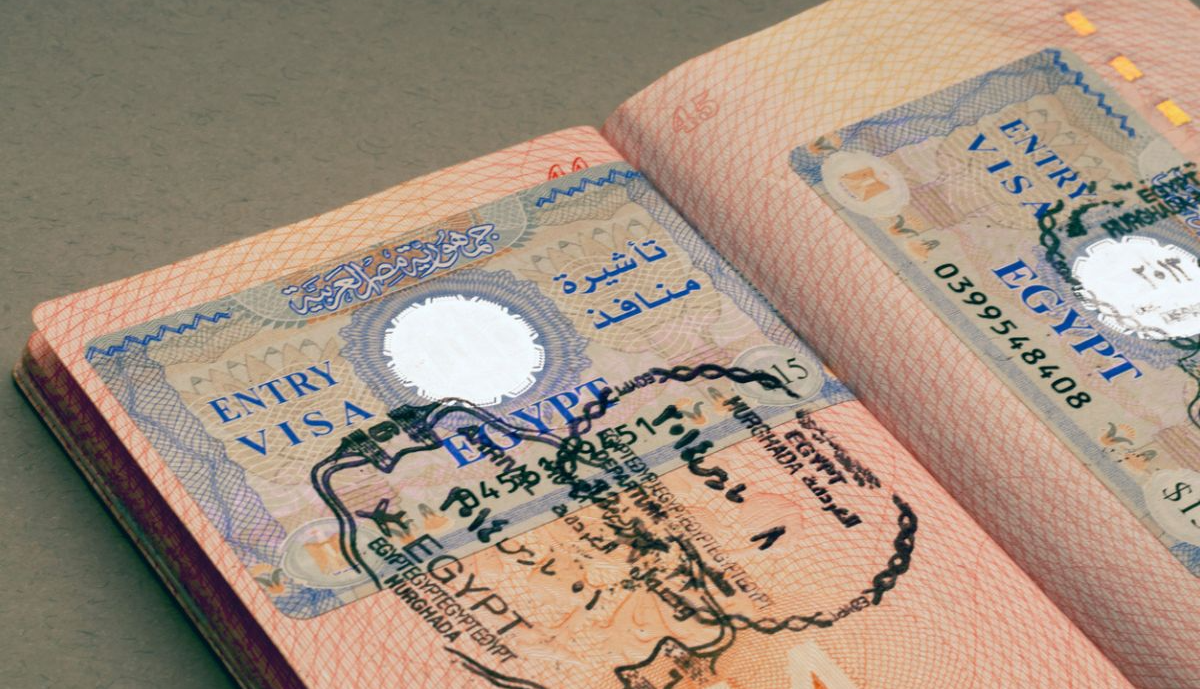
Egypt Launches Revolutionary E-Visa on Arrival System for 78 Eligible Countries
-

18-Aug-2023
Saudi Airline Launches Global Travel Sale 50 Percent Off on All Flights
-

09-Aug-2021
Good News for UAE Residents wanting return to UAE
-

24-Aug-2025
Oman Launches Golden Visa Scheme from August 31, 2025
