
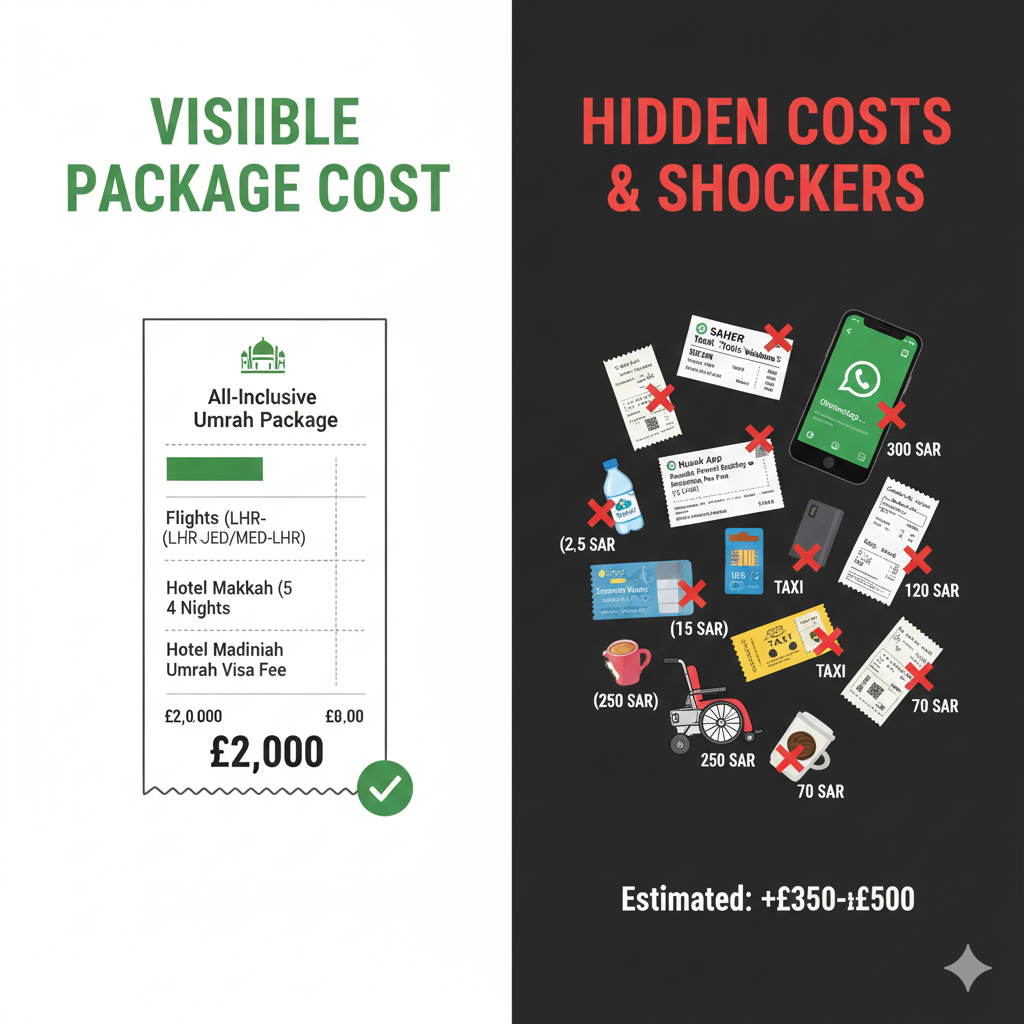
When planning a spiritual journey, many pilgrims focus solely on the "all-inclusive" price tag of their package. However, the reality of traveling to Makkah and Madinah in 2026 involves various hidden costs that can quickly inflate your budget if not anticipated. To ensure your focus remains on worship rather than financial stress, you must account for these "unseen" expenses before departing for Umrah.
Below is a detailed breakdown of the 15 hidden costs and financial "shockers" you may encounter.
1. Administrative and Digital Fees
Even if you have secured a "cheap" package, the digital infrastructure of modern Saudi travel comes with its own set of mandatory costs.
Nusuk App Service Charges: Although the app is free to download, booking specific "premium" slots or utilizing certain third-party integration services may incur small processing fees.
Biometric Verification Fees: Many countries now require biometric data (fingerprints and iris scans) through centers like VFS Tasheer. These centers charge a service fee that is often not included in the base visa price.
Mandatory Health Insurance: Every Umrah visa includes mandatory insurance. While often bundled, the insurance cost for a Tourist eVisa varies based on your age and health history.
2. Transportation "Shockers."
While your Umrah packing list might include comfortable walking shoes, you will inevitably need motorized transport. This is where many pilgrims face a big shocker.
Local Transport Price Comparison
| Transport Mode | Hidden Cost Factor | Estimated Price (SAR) |
|---|---|---|
| Haramain High-Speed Train | Booking late or changing dates | 150 - 250 |
| Private Taxis | "Peak hour" surcharges during prayer times | 50 - 100 (Short distance) |
| Hotel Shuttles | Some "budget" hotels charge for lost shuttle cards | 10 - 20 |
| Ziyarat Tours | Entry fees to private museums or historical sites | 20 - 50 per site |
The "Good Traffic" Myth: While Saudi Arabia has implemented strict rules to ensure good traffic flow, the cost of private transport during Friday (Jummah) or the last ten nights of Ramadan can triple.
Airport "Porter" Tips: Authorized porters at Jeddah and Madinah airports have fixed rates, but "unauthorized" helpers may demand much higher tips for handling your Umrah packing list bags.
3. Communication and Connectivity
In 2026, staying connected is a necessity for using the Nusuk app, but it isn't free.
Saudi SIM Cards: Expect to pay between 80 to 150 SAR for a data-heavy SIM card (STC, Mobily, or Zain).
The WhatsApp Calling Ban: As a big shocker for many, standard WhatsApp voice calls are often restricted. You may end up spending extra on "international calling credits" or specific VoIP-friendly data roaming packages.
Portable Power: If you didn't include a high-capacity power bank in your Umrah packing list, buying one in the Makkah malls will cost 40% more than at home.
4. Daily Life and Hygiene
The physical rigors of Umrah mean your daily consumption habits will change, leading to small but frequent costs.
Laundry Services: Makkah and Madinah hotels have notoriously high laundry rates. A single Thobe or Abaya can cost 15–20 SAR to wash. Look for local "Laundromat" shops tucked in side streets for 5 SAR per piece.
The "Zamzam" Tax: While the water is free at the Haram, the standardized 5L bottles for departure at the airport must be purchased from authorized points (approx. 12.5–15 SAR).
Toiletries & Sun Protection: If you run out of unscented soap or sunscreen, pharmacy prices in the "Haram zone" are significantly marked up.
5. Food and Religious "Extras"
Unless your package includes full-board (three meals a day), food will be a major variable.
The "Al-Baik" Lineup: While Al-Baik is affordable, many pilgrims find themselves ordering "delivery" via apps like HungerStation to avoid the two-hour wait times, adding delivery and service fees.
Wheelchair Assistance: If you or an elderly companion becomes exhausted during Tawaf, hiring an official motorized wheelchair can cost between 150 to 300 SAR. Note: Beware of unauthorized "helpers" who may be removed by security mid-ritual.
Hady (Sacrifice) and Sadaqah: While not strictly part of Umrah (unlike Hajj), many pilgrims choose to perform a voluntary sacrifice or give charity. Ensure you use official platforms like Adahi to avoid scams.
6. How to Avoid These Costs Before Departing for Umrah
Preparation is the best defense against financial "shocks."
Check the Fine Print: Ask your agent: "Does the package include the 15% VAT and the Municipality Tax (5%)?"
The Buffer Fund: Always set aside at least $300 - $500 (approx. 1,100 - 1,800 SAR) per person specifically for these hidden expenses.
Pre-Book the Train: Use the HHR Train app to book your Makkah-Madinah tickets weeks in advance. Last-minute tickets are rare and expensive.
Conclusion
A successful pilgrimage is one where your mind is at peace. By acknowledging these hidden costs and the digital "shockers" of 2026, you can ensure that your Umrah packing list includes a realistic budget alongside your Ihram. Knowing that you have accounted for everything from good traffic delays to Nusuk app fees allows you to step into the Haram with a heart full of devotion.
Would you like me to create a digital "Umrah Budget Calculator" template in Excel format to help you track these expenses?
Related News
-
10-May-2022
Shishpier Glacier Lake Flooding Sweeps Away Hassanabad Bridge Disconnecting Gilgit & Hunza Connection
-

19-Feb-2025
Punjab Government Plans Glass Train from Islamabad to Murree: A Scenic Journey Awaits
-
07-Sep-2026
Pakistan Expands e-Passport Services to NADRA Centres From September 7
-
17-Oct-2024
UAE Visa Ban for Pakistan: Causes and Reopening
-
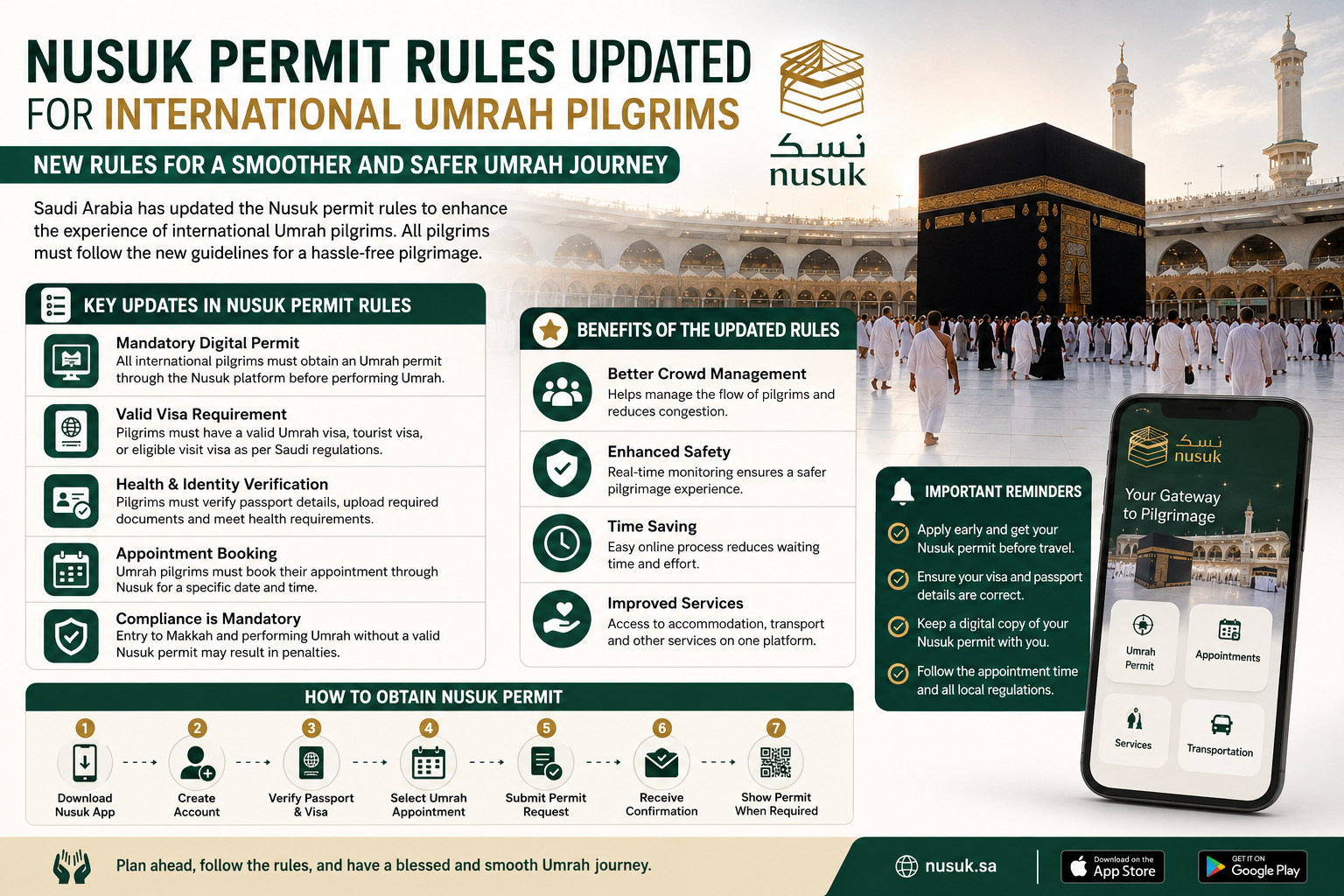
09-Jun-2026
Nusuk Permit Rules Updated for International Umrah Pilgrims
-
10-Sep-2025
Umrah Package Prices from Pakistan Set to Soar Amid Stricter Visa Rules
-
19-Apr-2025
Naran season starts. Find out best tour packages and how to reach Naran on car.
-
30-Jan-2025
How to Find the Best Deals on Flights for Hajj and Umrah
-
14-Jun-2022
Saudi Arabia Removes All Restrictions Of Covid Ahead of Hajj
-
09-Dec-2025
The Private Hajj Scheme 2026 Guide for Aspiring Pilgrims
-
05-Mar-2025
Service Charges from Munazzamat for Hajj 2025
-
29-Oct-2021
List of countries that Indonesia Bali open to Tourists
