
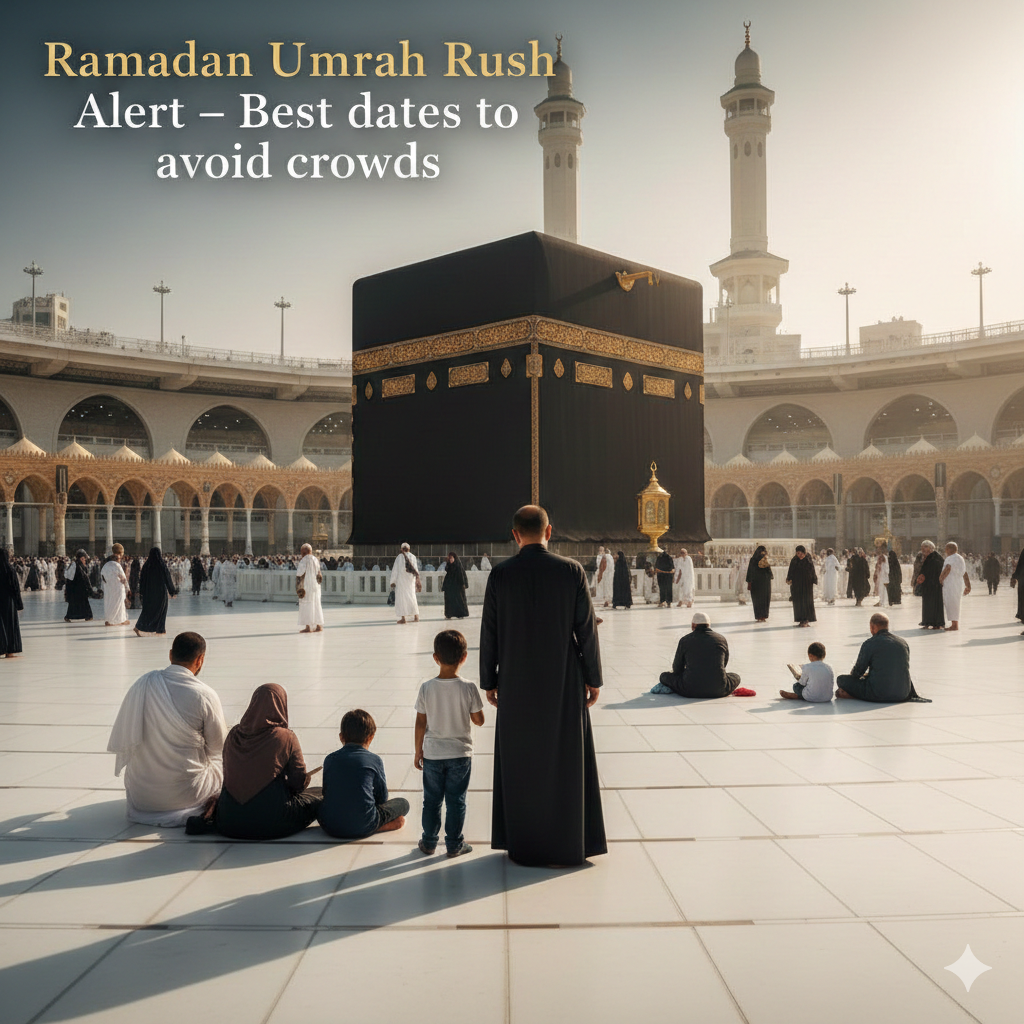
Performing Umrah during the holy month of Ramadan is a spiritual milestone for millions. However, the surge in pilgrims often leads to overwhelming congestion around the Haram. If you are planning your journey for 2026, staying informed with a Ramadan Umrah Rush Alert is essential to ensure a peaceful and manageable pilgrimage. Choosing the best dates to avoid crowds can significantly enhance your spiritual experience by allowing you more space for reflection and prayer.
Understanding the Ramadan Umrah Rush
The influx of pilgrims during Ramadan is not uniform throughout the month. The crowd density fluctuates based on the significance of specific days, school holidays in Islamic countries, and the proximity to the Laylat al-Qadr (the Night of Power). To navigate this, you must look for the best dates to avoid crowds during the early and mid-stages of the month.
Why Crowd Management Matters
Safety: High density can lead to pushing and exhaustion.
Accessibility: Getting close to the Kaaba or finding space in the Mataf becomes difficult.
Logistics: Transport and hotel check-ins take significantly longer during peak periods.
Spirituality: Lower crowd levels allow for a more tranquil and focused "Ibada" (worship).
The Strategy: Identifying the Best Dates to Avoid Crowds
To effectively follow a Ramadan Umrah Rush Alert, you must categorize the month into three distinct phases. Each phase has a different "Rush Profile."
1. The Early Bird Window (1st to 10th of Ramadan)
The first ten days are generally the best dates to avoid crowds compared to the rest of the month. While it is still busier than a regular month, the international influx is usually just beginning to build. Many locals are settling into their fasting routines at home, making the Mataf slightly more breathable.
2. The Mid-Month Plateau (11th to 19th of Ramadan)
The crowd begins to swell as the second ten days (the days of Forgiveness) progress. While not as quiet as the first week, these are still better than the final ten days. If you cannot make it during the first week, these are your secondary best dates to avoid crowds.
3. The Final Ten Days (The Peak Rush)
According to every Ramadan Umrah Rush Alert, the final ten days of Ramadan see the highest concentration of people. This period includes the search for Laylat al-Qadr and the conclusion of the Quran (Khatm-ul-Quran). Avoid these dates if your primary goal is to avoid massive crowds.
Density Analysis
For those tracking the Ramadan Umrah Rush Alert, it is important to understand which factors drive the "Rush." Below is a breakdown of the key elements influencing the best dates to avoid crowds.
| Factor | Impact Level | Strategy for Pilgrims |
|---|---|---|
| Weekend (Friday/Saturday) | Very High | Avoid performing Umrah on these days; stay in your hotel. |
| Laylat al-Qadr (27th Night) | Critical | Massive crowds; expect total gridlock in Makkah. |
| Early Ramadan Weekdays | Low to Moderate | These are the best dates to avoid crowds. |
| Post-Iftar Hours | High | The "Rush" peaks from 9:00 PM to 2:00 AM. |
Step-by-Step Guide to Beating the Rush
If you want to capitalize on the best dates to avoid crowds, follow this tactical numbered list for your 2026 pilgrimage:
Book for the First Week: Data shows that the Ramadan Umrah Rush Alert is lowest during the first 7 days of the month.
Choose Weekday Slots: Aim for Monday through Wednesday. Thursday nights begin the weekend rush as locals arrive from Jeddah and Riyadh.
Utilize the "Dead Hours": The best dates to avoid crowds also have "best times." The period between 8:00 AM and 11:00 AM (after Fajr and Ishraq) is often the quietest time in the Mataf.
Stay in Makkah Early, Madinah Late: Consider doing your Umrah in the first week of Ramadan, then moving to Madinah for the final ten days, as Madinah—while busy—is often more spread out than the immediate vicinity of the Kaaba.
Monitor the Nusuk App: Use the official app to check capacity. A "Green" status on the app indicates the best dates to avoid crowds in real-time.
Regional Factors Influencing the Ramadan Umrah Rush Alert
The Ramadan Umrah Rush Alert isn't just about the number of people; it’s about the infrastructure's ability to handle them. Several regional factors can change which days are the best dates to avoid crowds:
Public School Holidays: Check the Saudi academic calendar. If schools are in session, weekday mornings are significantly quieter.
International Flight Schedules: Large groups from Southeast Asia and North Africa often arrive in waves.
Government Regulations: Sometimes, the Ministry of Hajj and Umrah limits permits for those who have already performed Umrah recently to ensure the best dates to avoid crowds remain accessible to first-timers.
Pro Tip: Always carry a refillable water bottle and a foldable prayer mat. Even on the best dates to avoid crowds, the sun can be intense, and the marble floors can get crowded quickly during the five daily prayers.
Detailed Comparison: Early vs. Late Ramadan
To understand why we emphasize the best dates to avoid crowds, look at the comparative experience of a pilgrim:
Early Ramadan Experience:
Mataf Access: Usually 20–30 minutes to reach the Kaaba.
Tawaf Duration: Approximately 35–45 minutes.
Prayer Space: Possible to find a spot inside the mosque 30 minutes before Adhan.
Overall Alert Status: Low to Medium Ramadan Umrah Rush Alert.
Late Ramadan Experience:
Mataf Access: Can take over 2 hours due to human traffic jams.
Tawaf Duration: 90+ minutes as the circles expand to the outer plazas.
Prayer Space: Must arrive 2–3 hours early to secure a spot inside.
Overall Alert Status: Critical Ramadan Umrah Rush Alert.
Staying Updated with the Ramadan Umrah Rush Alert
Things can change rapidly. A sudden change in visa policy or a special event can shift the best dates to avoid crowds. To stay ahead, pilgrims should:
Follow the Ministry of Hajj and Umrah on social media.
Check weather forecasts (extreme heat can push more people to perform Umrah at night).
Consult with experienced travel agents who track the Ramadan Umrah Rush Alert annually.
By prioritizing the best dates to avoid crowds, you are not just making your trip "easier"—you are preserving your physical energy for the spiritual devotion that Ramadan demands. Whether it is your first time or your tenth, respecting the Ramadan Umrah Rush Alert is a hallmark of a prepared and mindful pilgrim.
Essential Checklist for Navigating the Rush
Checked the Ramadan Umrah Rush Alert for my specific travel dates.
Confirmed that my travel falls within the best dates to avoid crowds (1st–10th Ramadan).
Downloaded the Nusuk app for real-time permit management.
Scheduled Tawaf during "low-rush" morning hours.
Arranged accommodation within walking distance to avoid shuttle bus congestion.
Focusing on the best dates to avoid crowds ensures that your focus remains on the Divine, rather than the difficulties of the crowd. Plan wisely, stay informed of every Ramadan Umrah Rush Alert, and may your Umrah be accepted.
Related News
-
19-Apr-2025
Saudis target more than 2.5 Million Seats for Umrah flights by 2025
-
13-Feb-2025
Hajj 2025 Guide: Bank Coordinators & Contact Details | Trips.pk
-

06-May-2025
Portugal Fast-Track Work Visa for Foreign Workers Guide for May 2025
-

22-Apr-2025
Pilgrims Strongly Urged to Comply with Saudi Hajj Rules
-
08-May-2026
Saudi Arabia Enhances the Pilgrim Experience: Digital Hajj Services and the Tawakkalna App
-

21-Aug-2019
5 Finest Villas in Murree
-
07-Mar-2023
Hajj Policy 2023 Approved by ECC
-
11-Jun-2026
How the Latest Visa Reforms Will Impact Umrah Travelers
-
24-Mar-2026
Saudi Arabia Streamlines Umrah Departures and Issues Strict Warnings Against Visa Overstays
-

25-Jul-2019
Traveling Leaves You Speechless Then Turns You Into A Storyteller
-

12-Jun-2023
Japan's Cabinet Approves Long-Term Work Visas for Foreign Workers
-

09-Aug-2025
Sky Wars: Why India’s Airlines Are Paying a Heavier Price Than Pakistan
