
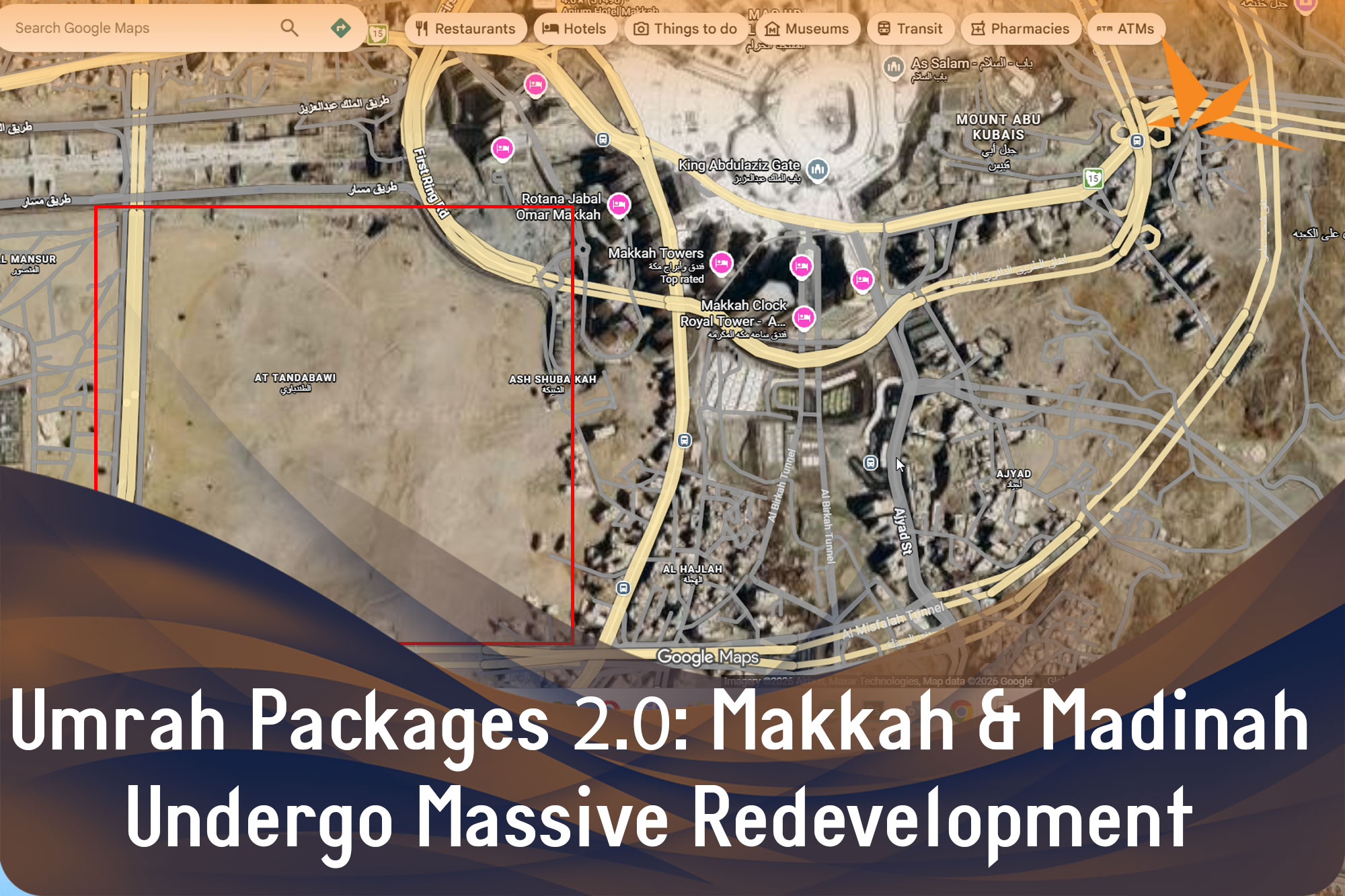
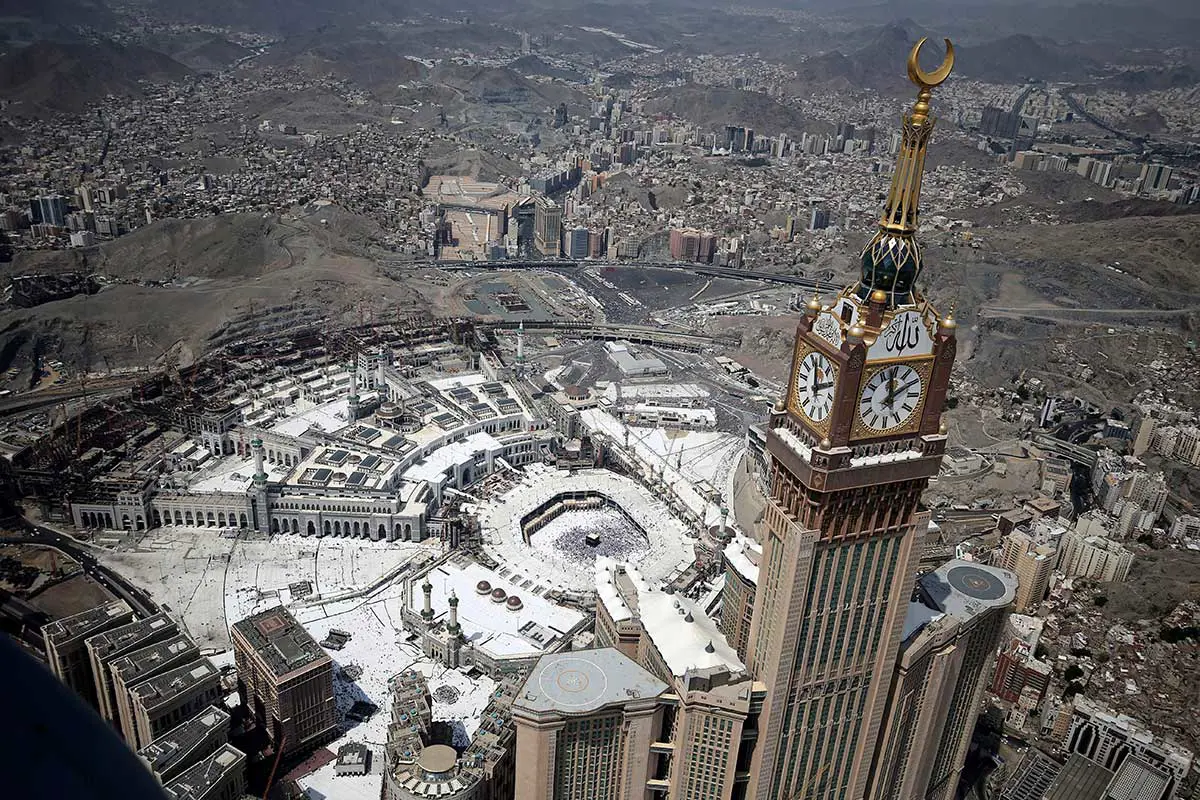
Saudi Arabia is entering a new phase of transformation in Makkah and Madinah, with major development projects changing the areas surrounding the two holiest mosques in Islam.
From the redevelopment of large areas near the Grand Mosque to new hotels, pedestrian zones, roads and smart-city infrastructure around Masjid Nabawi, the changes could significantly reshape the experience of millions of Umrah pilgrims.
There is no official Saudi project called “Umrah 2.0.” But the phrase captures the scale of the transformation now taking place: Saudi Arabia is not simply expanding facilities for pilgrims; it is redesigning much of the urban environment through which pilgrims move, stay and experience the holy cities.
Huge Areas in Makkah Being Prepared for Development
One of the clearest signs of the transformation is the redevelopment of Hindawiyah in Makkah.
In 2026, the Royal Commission for Makkah City and Holy Sites awarded development of the Hindawiya West and Hindawiya South sites, with a combined area of about 1.15 million square metres. The initial estimated project cost is around SAR 6 billion.
The development will extend the Masar Destination and involves new infrastructure and urban development, while property owners have been offered participation in the development or cash compensation under the project framework.
For visitors who regularly search for Umrah packages, the significance goes beyond another real estate project.
It means that the neighbourhoods surrounding the Grand Mosque are gradually being redesigned to handle a much larger and more modern pilgrimage ecosystem.
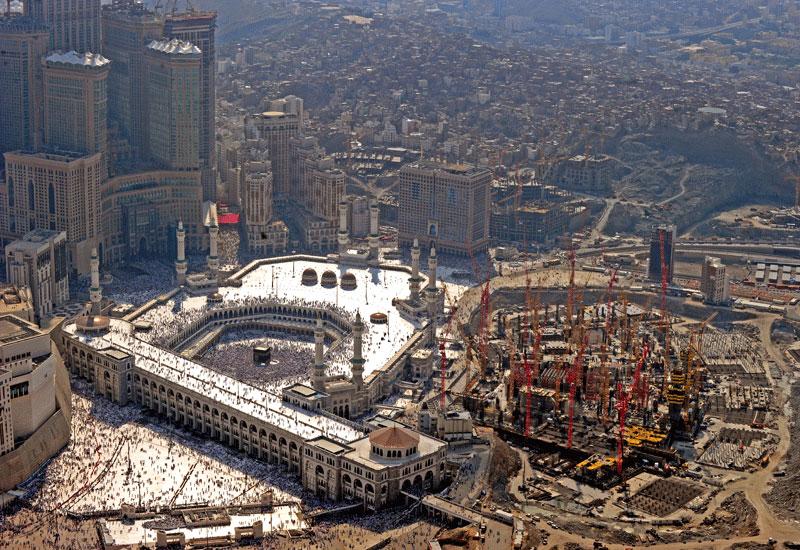
Makkah Is Being Designed Around the Pilgrim
The transformation is also visible in some of Saudi Arabia's largest planned projects.
The King Salman Gate project, announced in 2025, is planned adjacent to Masjid Al Haram and covers up to 12 million square metres of gross floor area.
The development is expected to combine:
- Hotels
- Residential accommodation
- Commercial areas
- Cultural facilities
- Public spaces
- Transportation connections
- Prayer areas
- Pedestrian infrastructure
The project is planned to provide prayer capacity for around 900,000 people across indoor and outdoor spaces.
That is a very different approach from simply adding another hotel or widening another road.
The goal is to create an integrated destination around the Haram.
What This Could Mean for Umrah Packages
For travellers looking at Umrah packages from Pakistan, the biggest change may eventually be the way the entire pilgrimage is packaged.
Today, most Umrah packages are built around a familiar combination:
Umrah Flights + Umrah Visa + Makkah Hotel + Madinah Hotel + Transport
The emerging model could be much broader.
The future Umrah package could include:
✈️ Flights
Flexible international and domestic flight options
🏨 Hotels
More accommodation choices close to the Haram and Masjid Nabawi
🚐 Transportation
Integrated airport, hotel and intercity transfers
🕋 Haram access
Packages designed around walking distance and accessibility
📱 Digital services
Smart navigation, digital information and visitor assistance
🕌 Ziyarat
More organized visits to religious and historical attractions
👨👩👧 Family services
Packages designed specifically for families, elderly pilgrims and groups
This is where the idea of Umrah 2.0 becomes particularly interesting for the global travel industry.
Madinah Is Changing Too
The transformation isn't limited to Makkah.
Madinah is also undergoing major development around Masjid Nabawi, with the central area being redesigned to accommodate growing numbers of visitors while improving mobility, hospitality and public spaces.
One of the most important projects is Rua Al Madinah, located east of the Prophet's Mosque.
The project covers around 1.35–1.5 million square metres, depending on the project measurement being referenced, and is planned to include more than 47,000 hotel rooms, commercial areas, museums and cultural spaces.
The development is also designed around modern technologies, including:
- Artificial intelligence
- Internet of Things systems
- Smart navigation
- Environmental monitoring
- Smart security
- Sustainable transportation
- Energy-efficient infrastructure
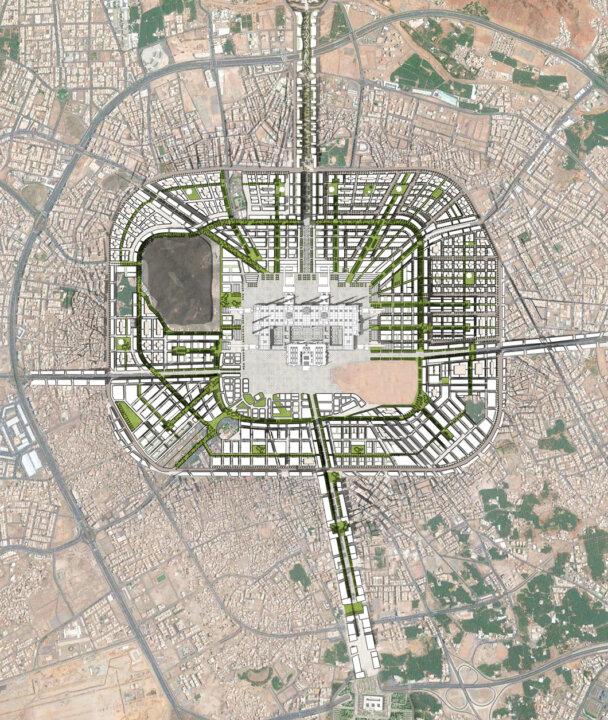
For someone booking Madinah hotels near Masjid Nabawi, this could eventually mean a much larger and more diverse hotel market around the mosque.
From Hotels Near Haram to Entire Pilgrim Destinations
One of the biggest changes taking place is the move away from viewing Makkah and Madinah simply as places where pilgrims need a hotel.
The cities are increasingly being developed as complete visitor destinations.
Imagine a future Umrah journey where a pilgrim can move from the airport to the hotel, from the hotel to the Haram, and between religious and historical sites through an integrated network of roads, pedestrian routes, public transportation and digital services.
That is the direction many of these projects appear designed to support.
In Madinah, for example, the central-area strategy includes wide plazas, shaded walkways, hotels, markets and restaurants. The Quba Walking Trail is also designed to provide a pedestrian connection between Masjid Nabawi and Quba Mosque.
What Happens to the Old Buildings?
For people visiting Makkah and Madinah regularly, perhaps the most noticeable part of the transformation is the removal of existing structures in areas earmarked for redevelopment.
Large-scale urban redevelopment naturally requires some properties and older neighbourhoods to be removed or reorganized.
But the end goal is much larger than demolition.
The process generally involves:
Property acquisition → Site clearance → Infrastructure → Roads and pedestrian areas → Hotels and commercial development → New visitor services
The Hindawiyah projects are a good example. The development framework provides for property owners to participate in the development or receive cash compensation, subject to the relevant arrangements.
The Next Generation of Umrah Travel
This transformation could have a major impact on the international Umrah travel market.
Travel companies selling Umrah packages from Pakistan, the UK, USA, Canada, India and other major pilgrimage markets may eventually have far more options when designing packages.
Instead of simply asking:
“How many nights do you want in Makkah and Madinah?”
the conversation could increasingly become:
“What kind of Umrah experience do you want?”
Economy Umrah
Affordable hotel + flights + visa + shared transport.
Family Umrah
Family-friendly hotels + private transfers + convenient locations.
VIP Umrah
5-star hotels + premium transportation + personalized assistance.
Luxury Umrah
High-end accommodation + private services + customized itinerary.
Senior-Friendly Umrah
Hotels and transportation selected around accessibility and reduced walking requirements.
This could make customized Umrah packages an increasingly important part of the market.
Why This Matters for Pilgrims From Pakistan
Pakistan is one of the world's major Umrah markets, and Pakistani travellers frequently search for terms such as Umrah packages from Pakistan, Umrah packages from Lahore, Umrah packages from Karachi, cheap Umrah packages, 5 star Umrah packages and Ramadan Umrah packages.
As Makkah and Madinah develop, the factors influencing those packages could change.
Hotel location, transportation routes, walking access, new hospitality developments and the availability of premium services could become just as important as the basic price of the package.
For travellers, that could eventually mean more choice rather than simply more hotels.
Makkah and Madinah Are Becoming Smart Pilgrimage Cities
Technology is another important part of the transformation.
Saudi Arabia's current development plans increasingly combine traditional religious destinations with modern infrastructure.
Madinah's central-area projects, for example, incorporate AI, IoT, smart wayfinding and environmental monitoring.
Meanwhile, the King Salman Gate project in Makkah is designed to connect the new development with public transportation networks while improving access to the Grand Mosque.
This points toward a future where technology quietly becomes part of the pilgrimage experience.
A pilgrim may not even think about the underlying technology.
They will simply notice that finding the hotel, navigating the city, getting transportation and moving around the Haram is easier.
Is This Really “Umrah 2.0”?
Not officially.
But the description is becoming increasingly appropriate for the transformation taking place.
Umrah 1.0 could be described as the traditional model:
Visa → Flight → Hotel → Transport → Umrah → Return
The emerging model is much broader:
Travel → Digital services → Smart accommodation → Integrated transportation → Haram experience → Ziyarat → Cultural experiences → Personalized services
And that is why the redevelopment of seemingly ordinary roads, buildings and neighbourhoods around Makkah and Madinah matters so much.
The changes taking place today could determine what the Umrah experience of the 2030s looks like.
The Bigger Picture
Saudi Arabia's development programme is ultimately about preparing Makkah and Madinah for the growing number of people visiting the holy cities.
The country is investing in accommodation, transportation, public spaces, infrastructure and visitor services while trying to preserve the religious and cultural character of the two cities.
For the global Umrah industry, the implications could be significant.
More hotels. More capacity. Better connectivity. More customized services. More technology. And potentially a completely different way of buying and experiencing an Umrah package.
The cranes and construction sites visible around Makkah and Madinah today may therefore be more than ordinary urban development.
They could be the foundations of the next generation of Umrah travel.
Related News
-
30-Dec-2020
What are The Most Beautiful Places To Travel in North Areas of Pakistan?
-

31-Mar-2021
Best Countries That Offer Easy Visa To Pakistanis
-

11-Apr-2025
Beware of Fraud: Bogus ETA and e-Visa Sites on the Rise
-
27-Oct-2021
List of countries that Thailand drop quarantine
-
05-Sep-2026
Top 10 Questions About Umrah Packages from Pakistan
-
13-Nov-2019
How Many People Die In Saudi Arabia during Hajj and Umrah
-
21-Apr-2024
Islamabad to Muscat: New low-cost route launched by Fly Jinnah
-

24-Aug-2021
Know How You Can Get Travel Insurance By Your Credit Card
-
16-Apr-2025
Accommodation rules updated for Hajj 2025 pilgrims, says Saudi Arabia.
-
09-Jun-2025
Thousands of New Jobs After Kuwait Opens Visa for Pakistani Workers
-
.webp)
05-Jun-2025
Hajj Begins With Sweeping New Changes
-
06-Feb-2025
Eco-Friendly Hajj & Umrah: Sustainable Travel Tips
